View the piece →
Pashmina
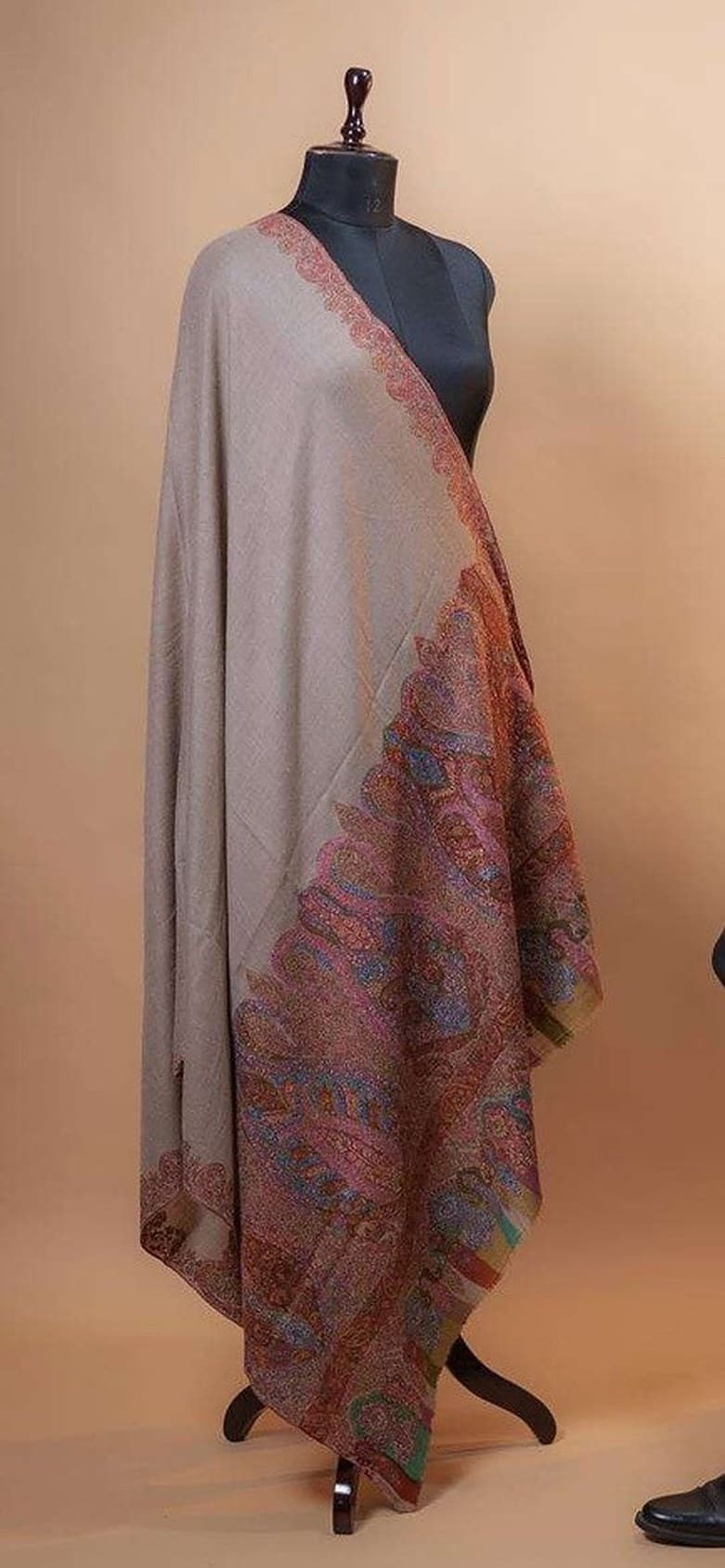
Wide-Bordered Pashmina
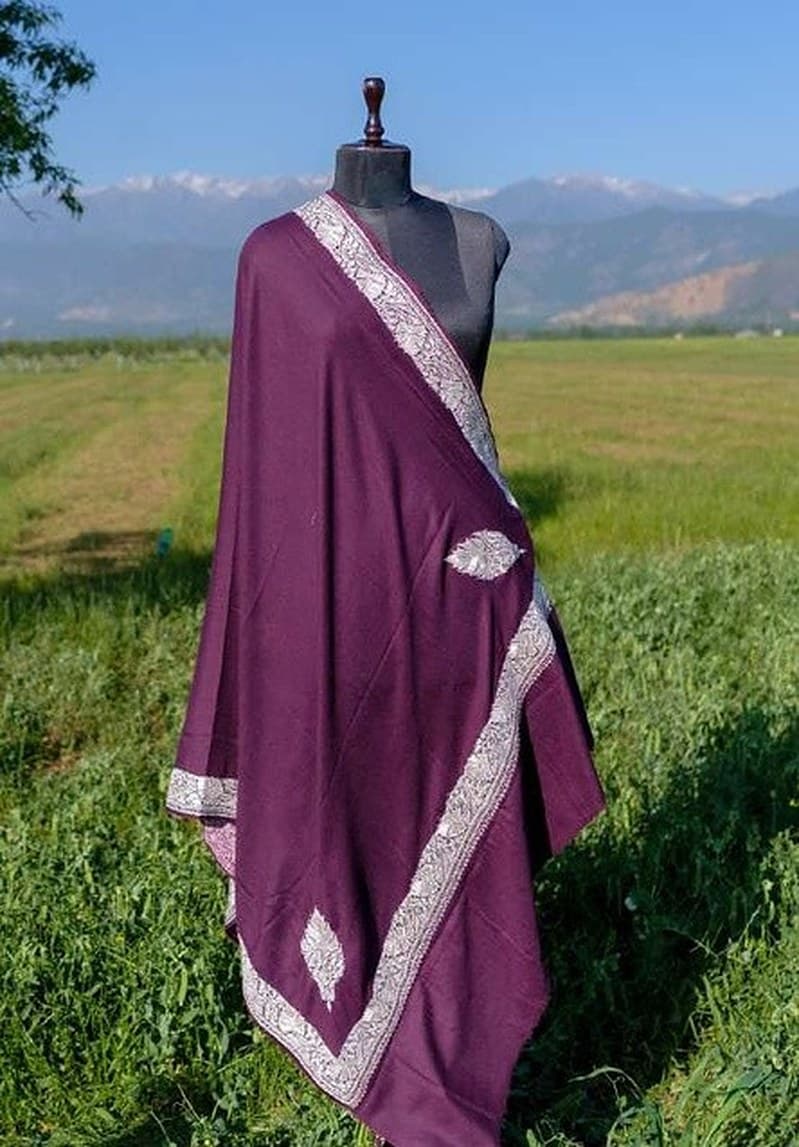
Sozni grand borders
Embroidery · Pashmina
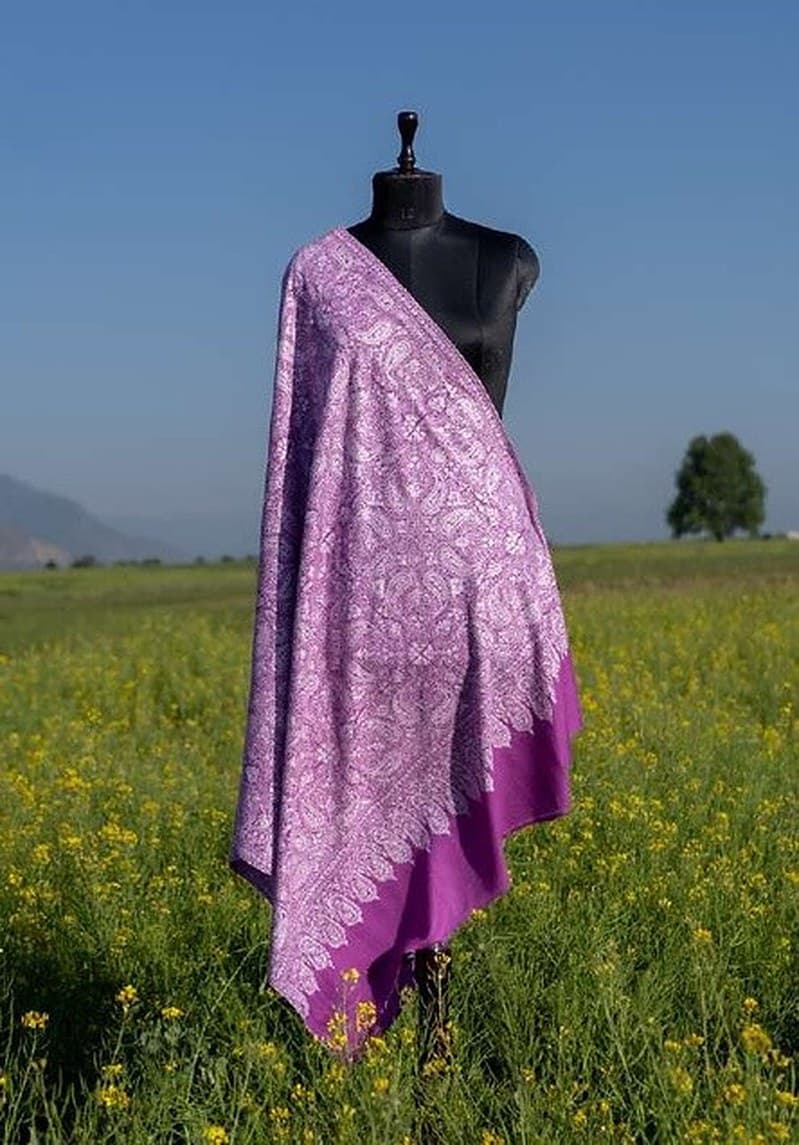
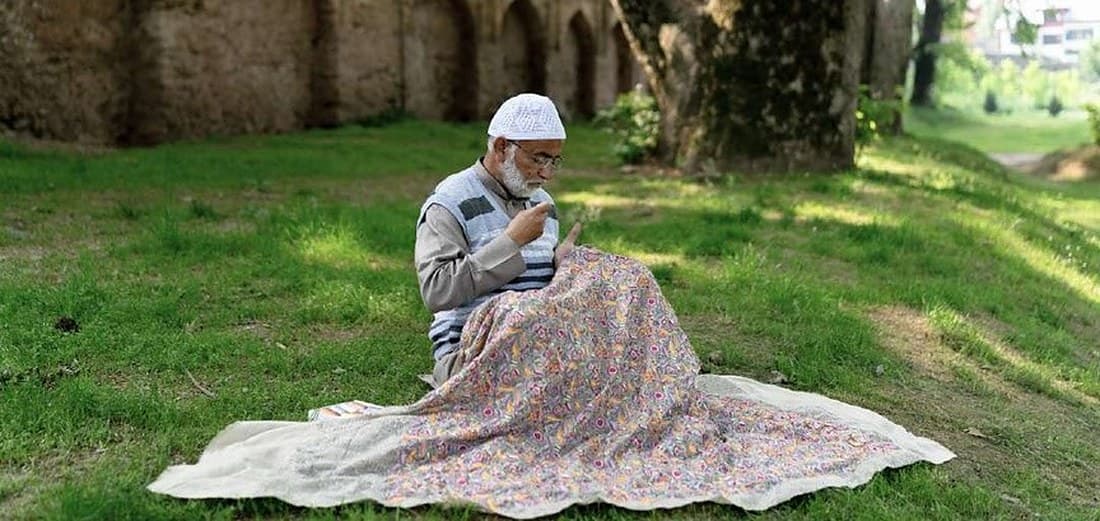
Sozni — from sozan, the needle — is the most refined embroidery of Kashmir. Working with a fine needle and silk thread, the sozankar builds paisleys, blossoms and vines in stitches so small that the design seems to be printed on the Pashmina, yet is identical on both faces of the cloth.
The design is first stamped onto the shawl in washable ink by a naqash. The embroiderer then follows it in satin and stem stitches, one colour at a time, for weeks or months. The finest work uses a single strand of silk and shows no knots on the reverse.
Density is everything. A wide border takes five to six months; embroidery that flows from the borders toward the centre, eight to ten; a shawl covered edge to edge — the jamawar of the Mughal court — nine to eleven months of one embroiderer's life.
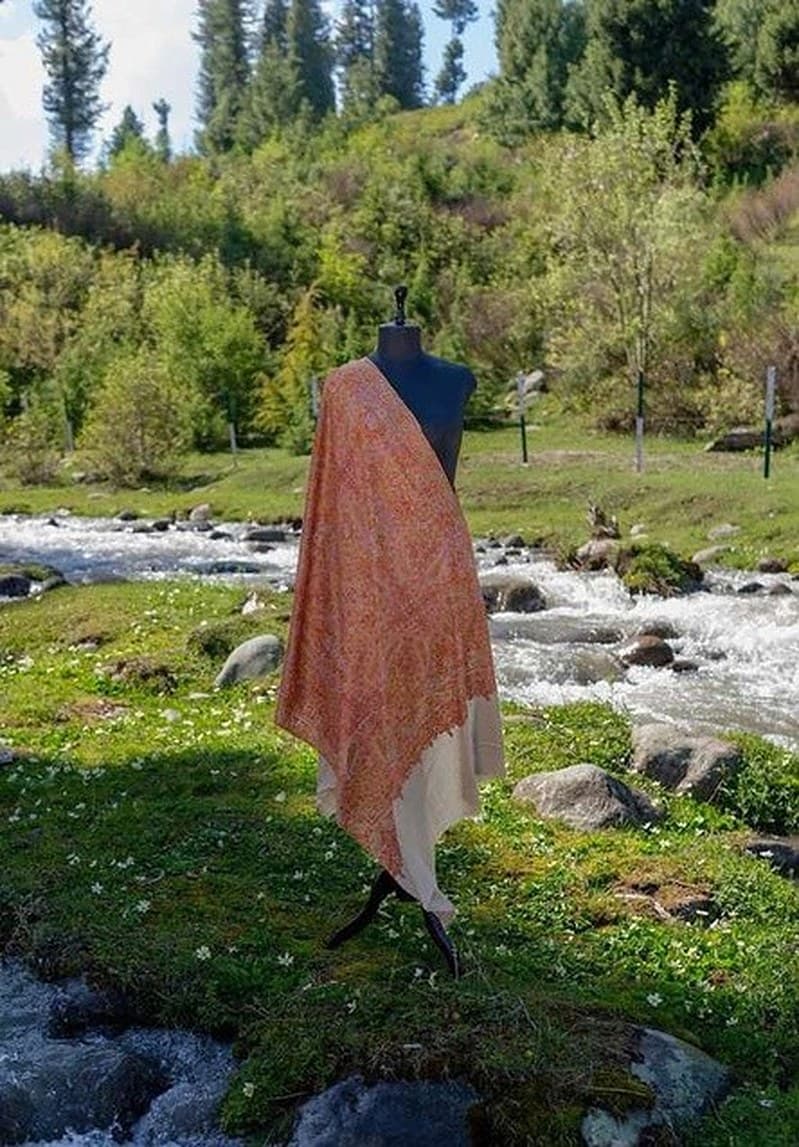
Sozni is traditionally worked tone-on-tone or in a small palette of muted silks — ivory on ivory, rust and sage on camel — with the paisley (badam or boteh), the chinar leaf and the flowering vine as its principal motifs.
Sozni is fine needlework in silk thread on Pashmina, traditional to Kashmir. It is worked in small satin and stem stitches following a stamped design, and the finest examples are identical on both sides of the shawl.
Depending on coverage, from five to six months for a wide border to nine to eleven months for an all-over embroidered shawl.
Guide: How to recognise a real Pashmina shawl — and why GI certification matters →
Pieces in this design
Prices on request. Every piece can be commissioned in your own size and palette.
Bespoke
Choose the size, the palette and the density of the work. Our naqash draws the design for your approval before a single knot is tied, a stitch made or a brush lifted.