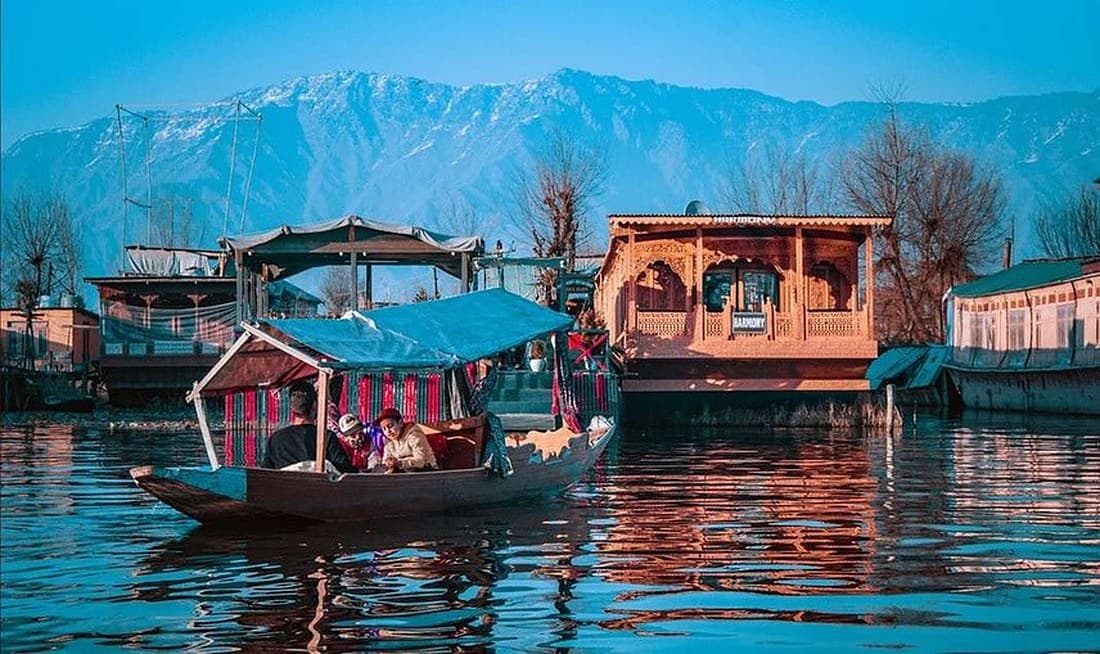
The Valley
Where luxury is born of the land
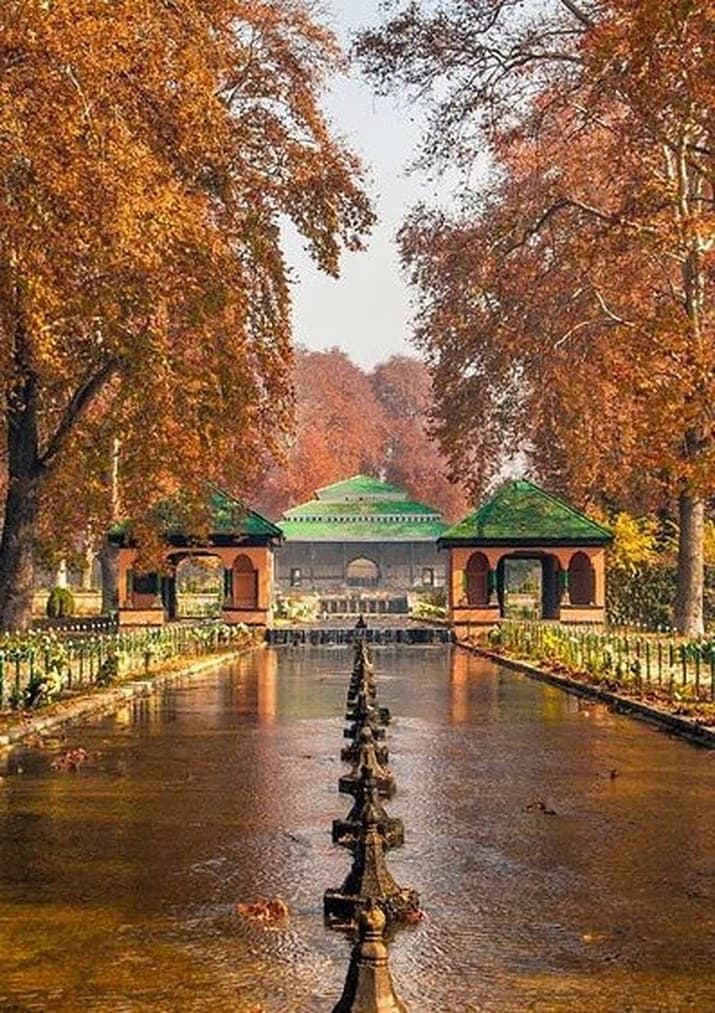
The walnut of the carver grows on its hillsides. The Pashmina of the weaver is gathered each spring on the high plateaus. The palettes of papier-mâché and crewel are drawn from its chinar trees in autumn, its saffron fields and its spring orchards.
A sanctuary of serenity and sophistication, Kashmir breathes a quiet, timeless luxury into every marvel made by its hands.
Six centuries
The royal origins of Kashmiri craft
Masters from Persia
Tradition holds that the scholar Mir Sayyid Ali Hamadani arrived in Kashmir with artisans from Persia, planting the seeds of shawl-weaving and the decorative arts.
The Budshah's patronage
Sultan Zain-ul-Abidin — remembered as the Budshah, the Great King — invited master craftsmen to the Valley and nurtured its carpet-weaving traditions.
Mughal splendour
Kashmir's shawls and carpets became treasures of the Mughal court — gifted by emperors, and prized across Asia.
The world takes notice
The Kashmir shawl crossed oceans to Europe, where its boteh motif was imitated so widely that it took the name of a Scottish mill town: paisley.
Protected by origin
Geographical Indication status now protects Kashmir's hand-knotted carpets, Pashmina, papier-mâché and walnut carving — and the families who keep them alive.
The hands
Skills that live in families, not factories
Nothing here is made by machine. Every technique is passed from master to apprentice, parent to child.
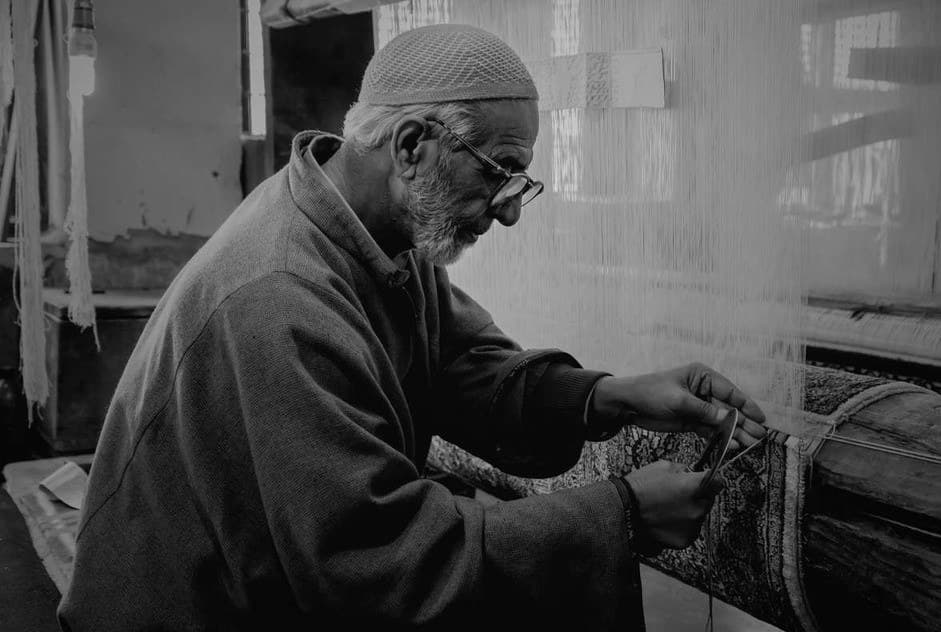
The weaver
Reads the talim and ties each knot by hand.
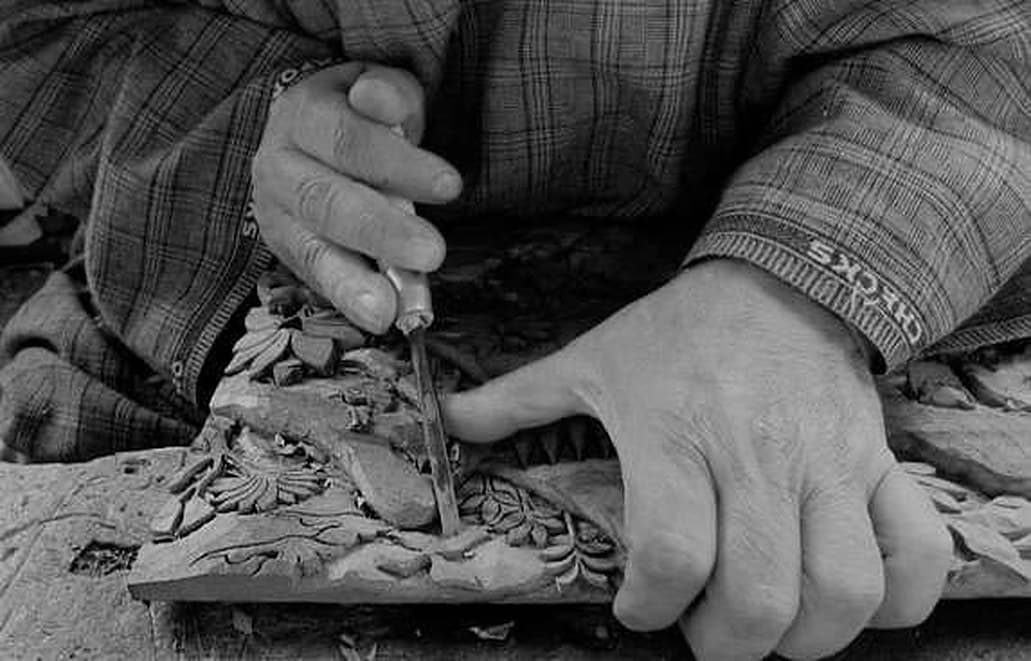
The carver
Finds the flower within the walnut grain.
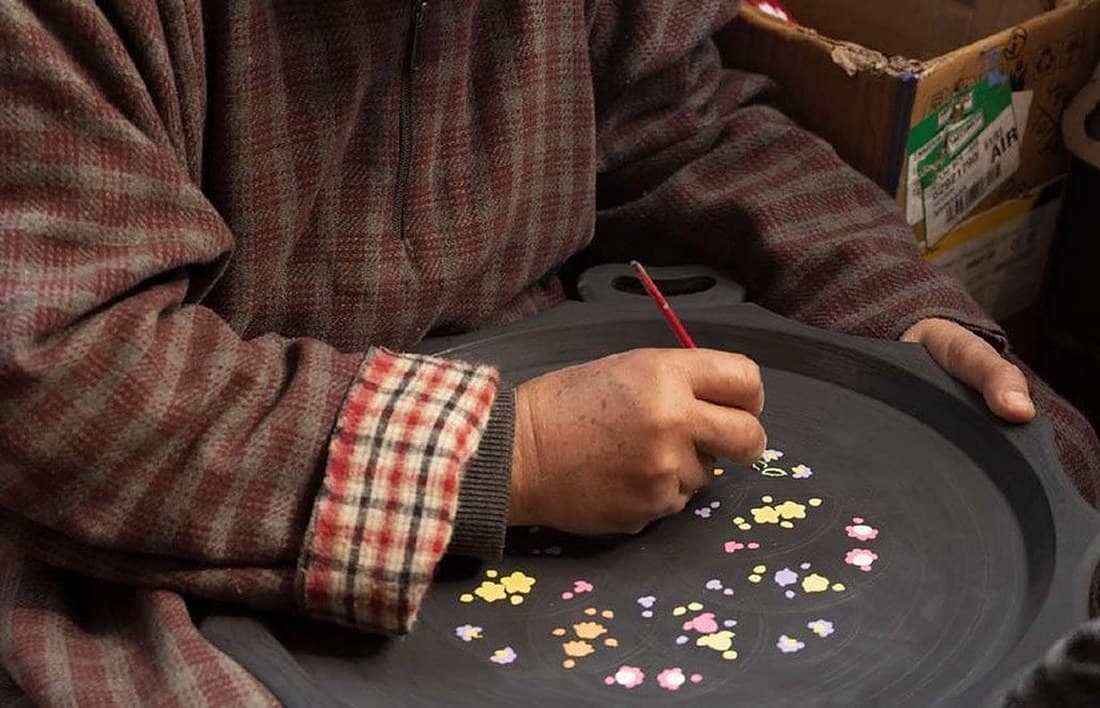
The naqash
Paints with brushes of a few fine hairs.
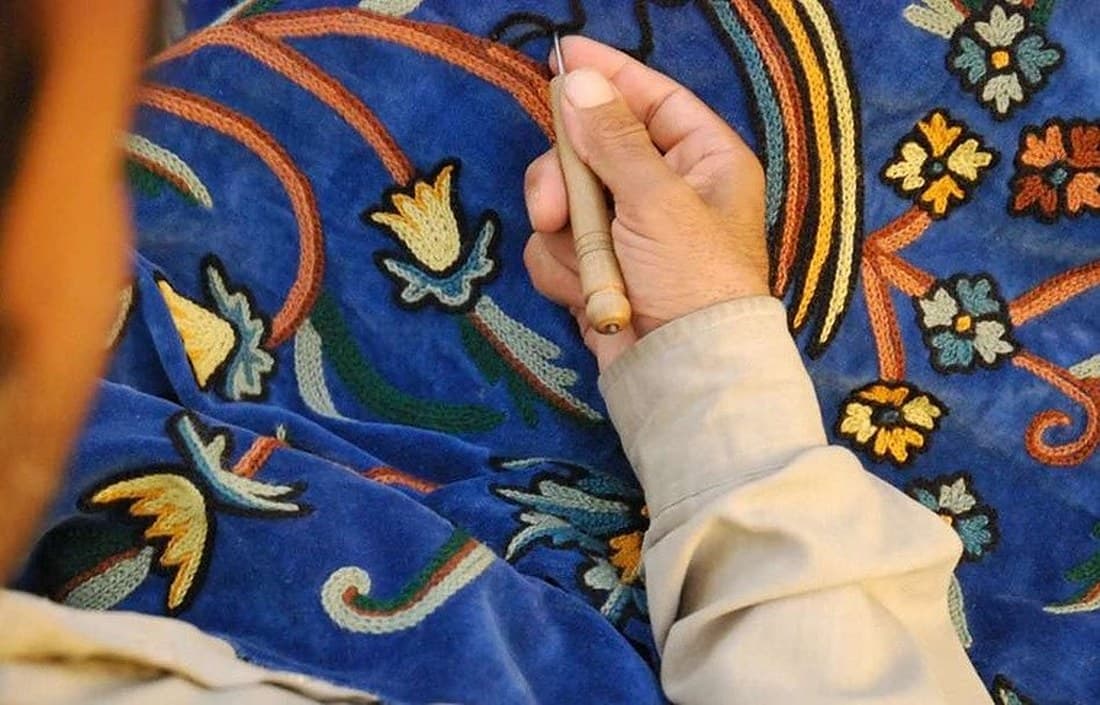
The embroiderer
Raises gardens in wool with a hooked needle.
“It is not just woodwork; it is a timeless legacy etched into nature's finest canvas.”On Kashmiri walnut carving