Buying guide · 6 min read
How to recognise a real Pashmina shawl — and why GI certification matters
By the IndoArtistry atelier ·
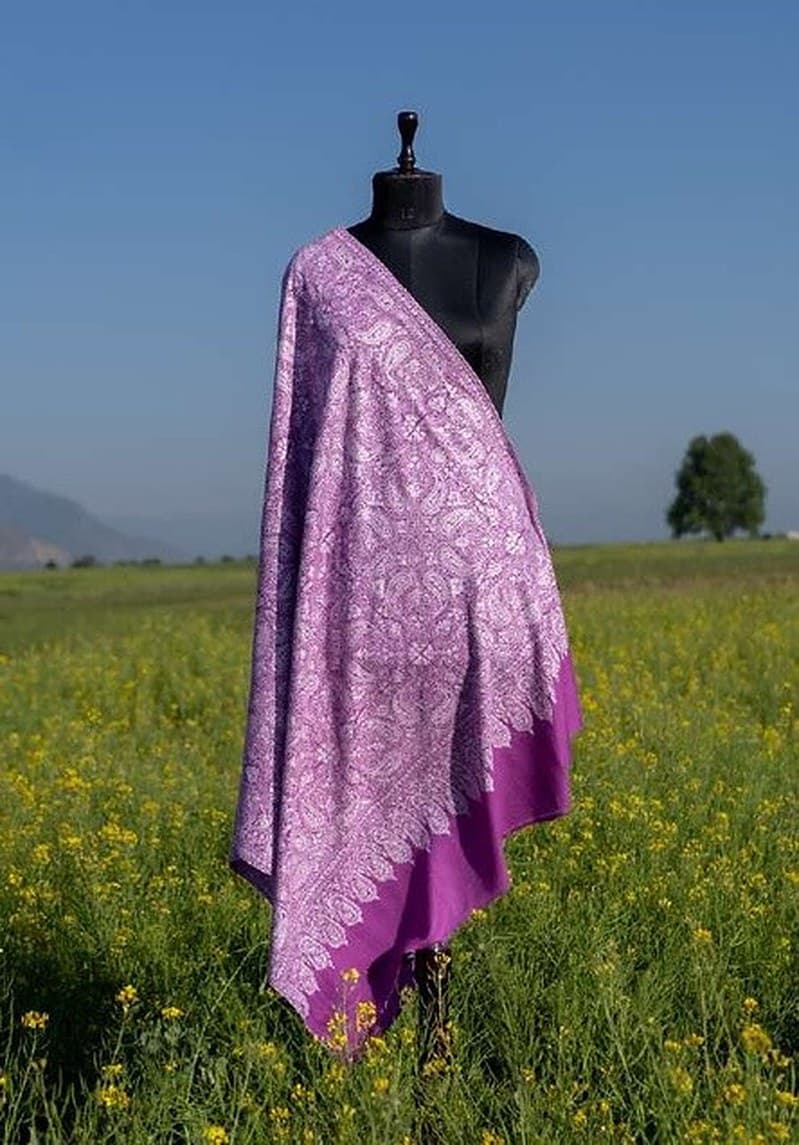
'Pashmina' is one of the most misused words in luxury. Much of what is sold under the name is acrylic, viscose or wool blended with a little cashmere. A genuine Kashmiri Pashmina is something else entirely — hand-spun, handwoven and made to outlive its first owner.
Where real Pashmina comes from
True Pashmina is the fine undercoat of the Changthangi goat, which lives on the high, cold Changthang plateau of Ladakh. The goats naturally shed this fleece each spring, when it is gathered by hand.
The fibre is so fine and delicate that it cannot be spun by machine without breaking. In Kashmir it is hand-carded and spun on a traditional wooden spinning wheel called the yinder, often by women in artisan households, and then woven by hand on wooden looms.
Feel, weight and warmth
A genuine Pashmina is remarkably light for its warmth, and has a soft, slightly matte hand rather than a slippery shine. Hold it for a moment and it warms quickly to your skin.
It also becomes softer with use and age. A shawl that feels unnaturally silky and cool, or that generates static, is likely to contain synthetic fibres.
Look closely at the weave
Hold the shawl up to the light. A handwoven Pashmina shows a fine, even weave with slight irregularities — a thread that is fractionally thicker, a line that is not machine-perfect. These are the mark of hand craftsmanship, not flaws.
A perfectly uniform, glossy surface usually indicates machine weaving.
The ring test is a myth
You may hear that a real Pashmina will pass through a finger ring. Fine shawls can — but so can fine synthetic and blended scarves, and a heavily embroidered genuine Pashmina will not. The ring test proves nothing about authenticity.
Blends are not fakes — if they are declared
Pashmina blended with silk is a legitimate and beautiful product. The problem is not blends but dishonest labelling. Ask for the exact composition in writing, and be wary of '100% Pashmina' at a price that could not cover weeks of hand-spinning and weaving.
Embroidery grades and time
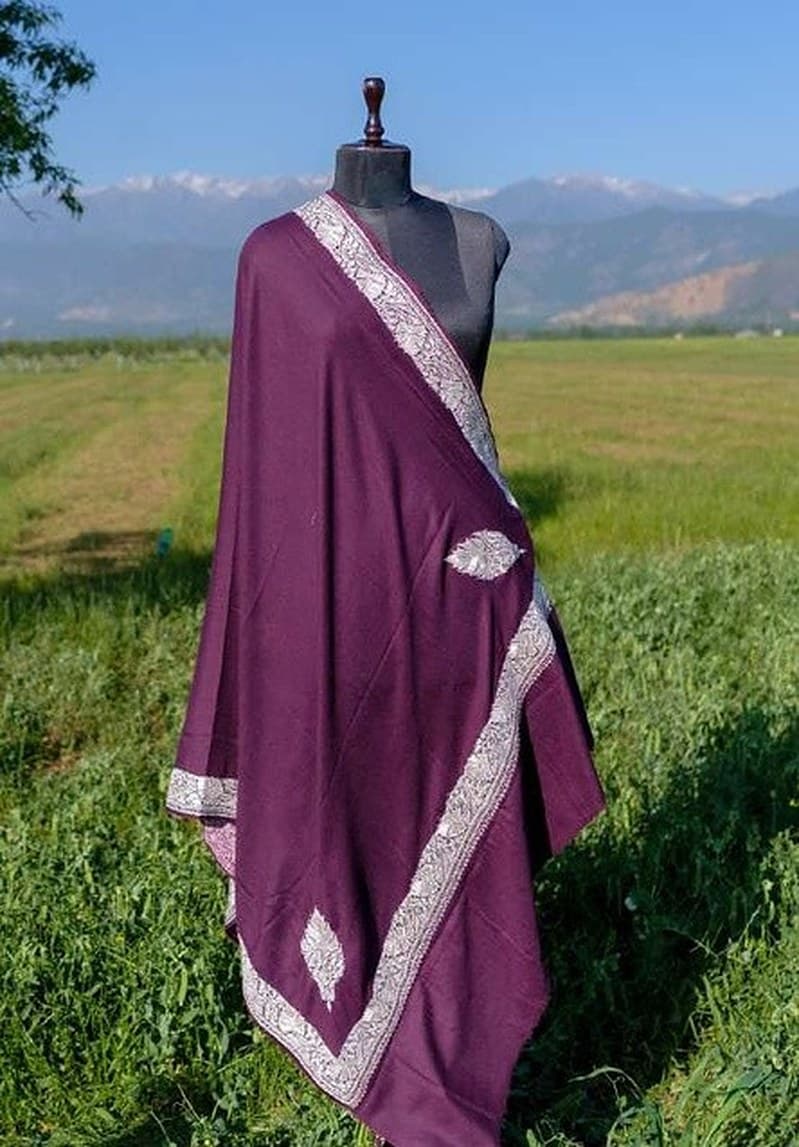
Hand embroidery adds months to a Pashmina. The more of the shawl it covers, the longer — and rarer — the piece.
- Plain Pashmina — 4 to 5 weeks
- Embellished (Tilla) borders — 2 to 3 months
- Wide Sozni borders — 5 to 6 months
- Deep embroidery from border toward centre — 8 to 10 months
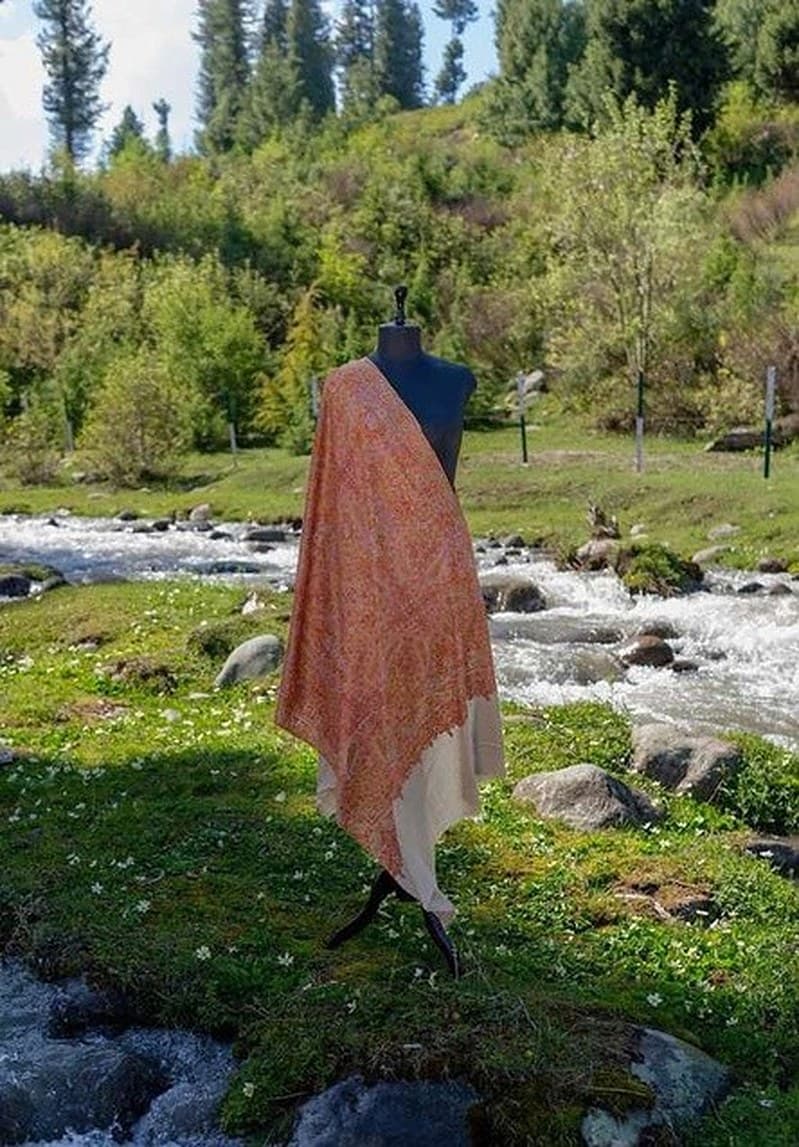
- All-over embroidery — 9 to 11 months
Why the GI tag matters
Kashmir Pashmina is protected by a Geographical Indication (GI) tag. A GI-certified Pashmina is guaranteed to have been made in Kashmir by traditional hand methods. It is the most reliable assurance available to a buyer — and it protects the artisans whose craft is copied around the world.
Questions
What is real Pashmina made from?
Real Pashmina is made from the fine undercoat of the Changthangi goat of Ladakh, hand-spun and handwoven in Kashmir.
Does a real Pashmina pass through a ring?
Some fine Pashminas do, but so do many synthetic scarves, and embroidered Pashminas will not. The ring test is not a reliable way to judge authenticity.
How long does it take to make an embroidered Pashmina shawl?
A plain Pashmina takes about 4–5 weeks. Embroidered borders take 2–6 months, and an all-over embroidered Pashmina takes around 9–11 months.
From the atelier
Explore our pashmina
Every piece is made by hand in Kashmir, with its materials, dimensions and making time declared.