View the piece →
Papier-Mâché
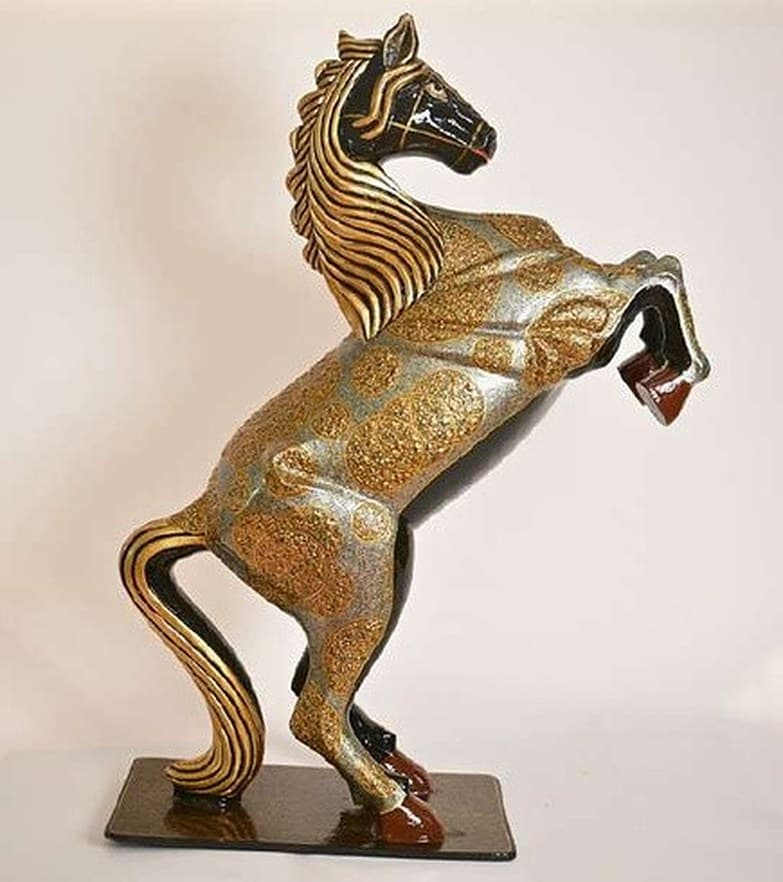
Chinar Horse
Chinar work in gold
Motif · Papier-Mâché, Pashmina, Copperware
The chinar — the oriental plane tree — is the emblem of Kashmir. Its five-pointed leaf turns from green to gold to crimson each autumn in the Mughal gardens of Srinagar, and Kashmiri artisans have painted, embroidered and engraved it for centuries.
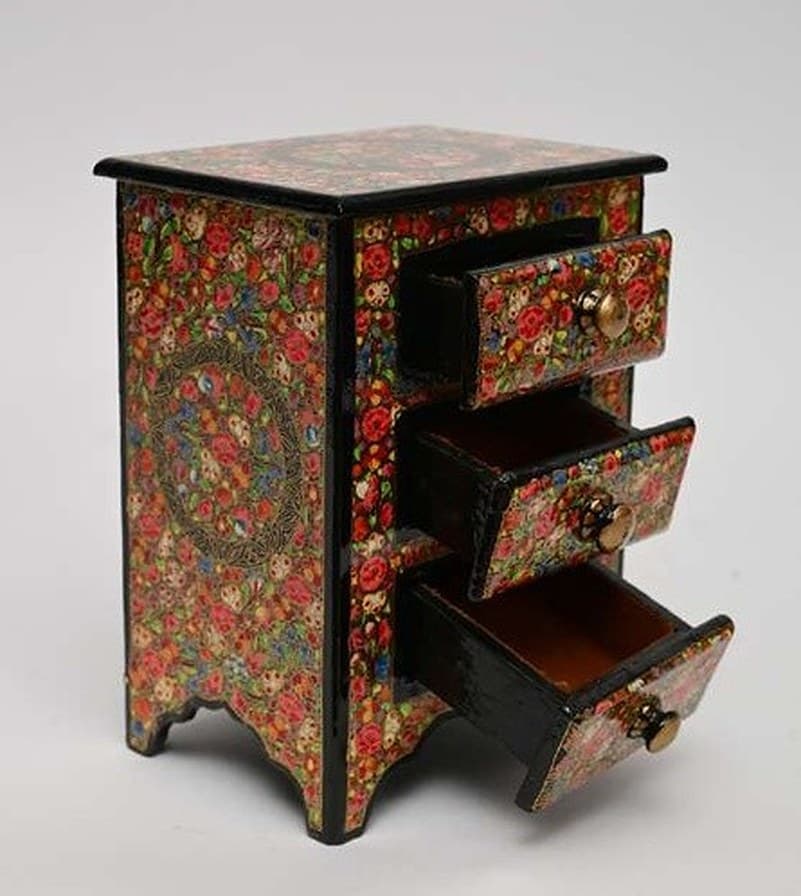
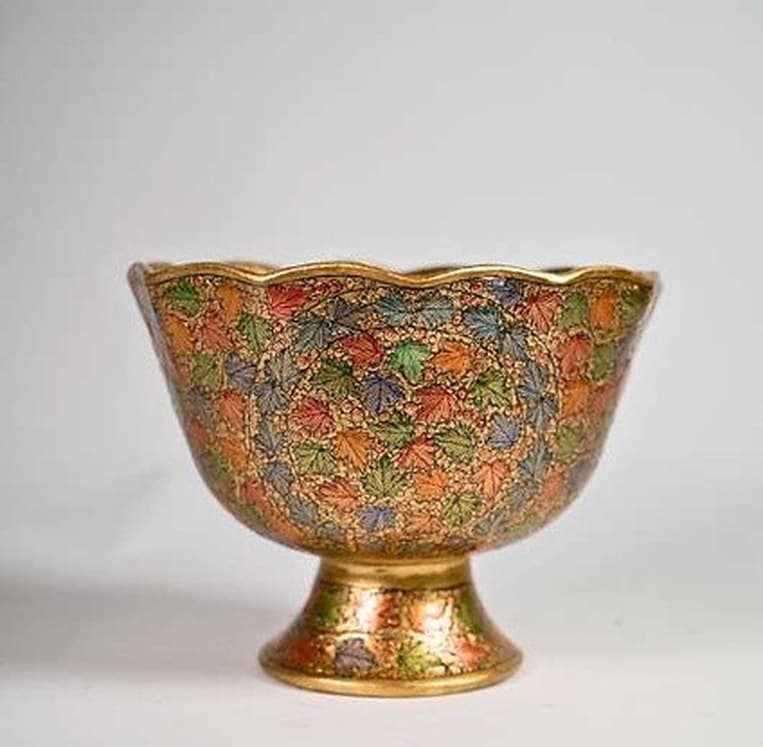
The Chinar design covers a form with overlapping leaves in autumn colours — copper, gold and green — often with the veins picked out in fine gold lines. On our rearing horse the leaves are rendered entirely in gold; on the Sun Chinar bowl they radiate from the base in warm copper tones.
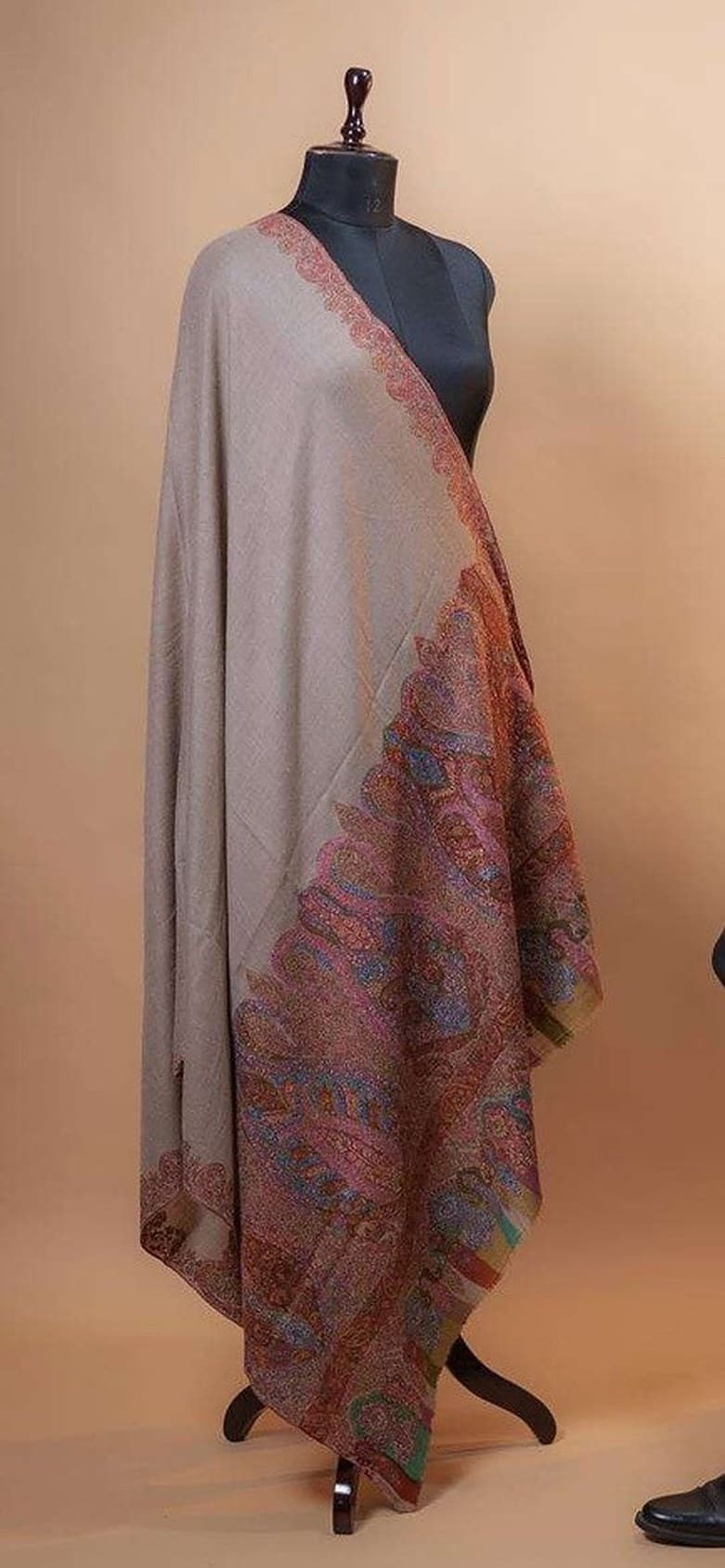
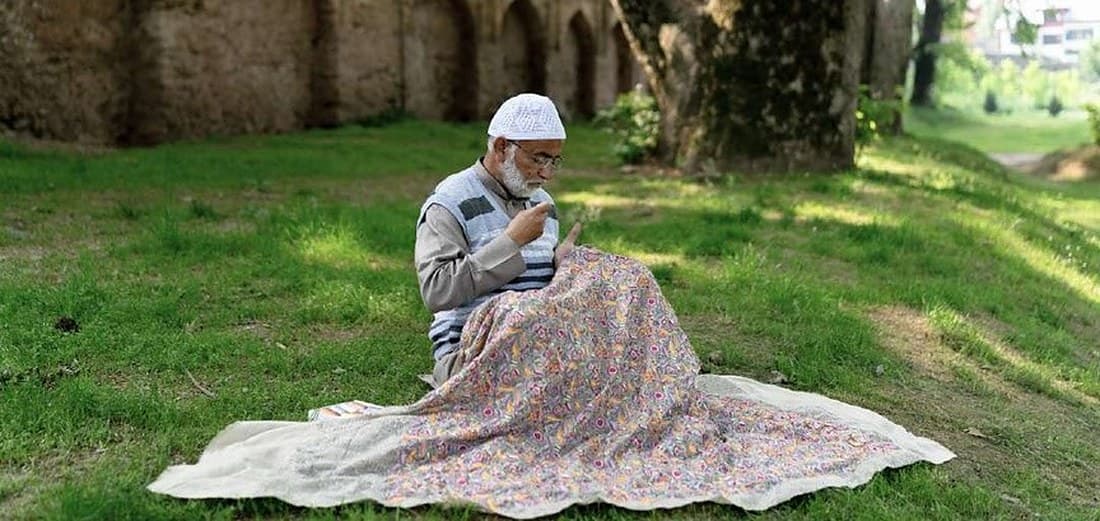
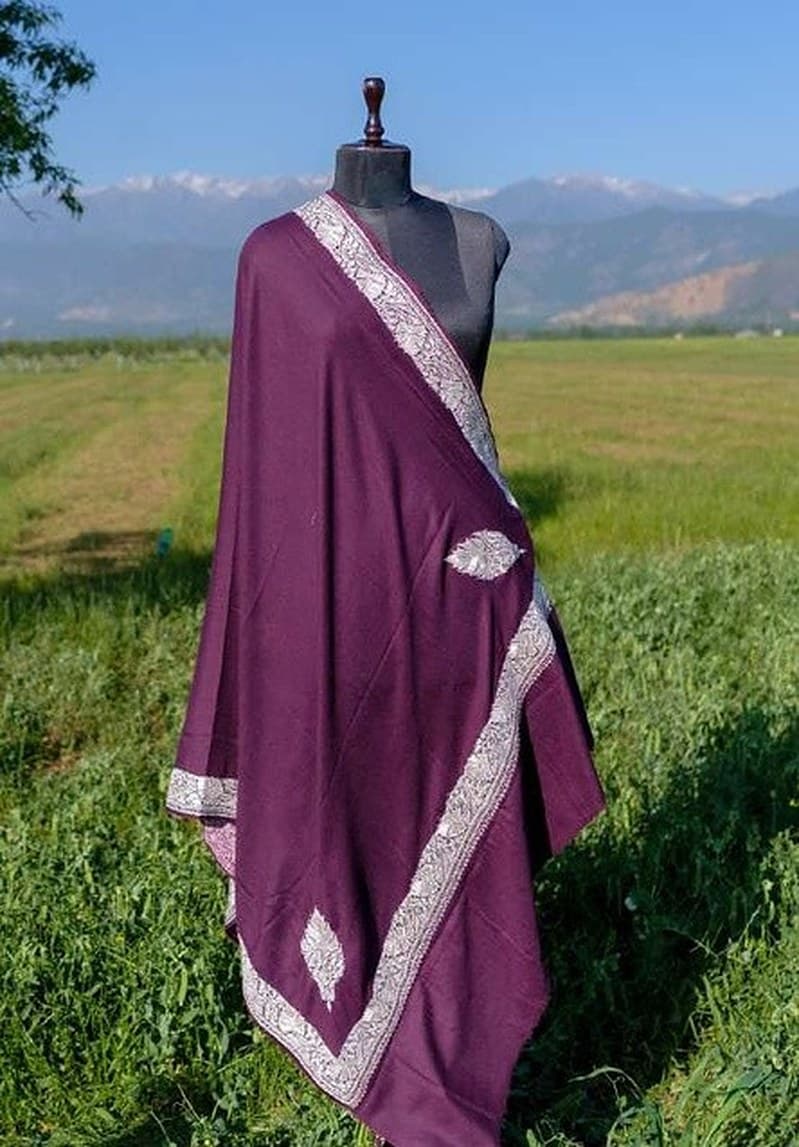
Chinar leaves are among the principal motifs of Tilla and Sozni embroidery, worked along shawl borders. Kashmiri coppersmiths engrave them into samovars and trays in the Naqashi tradition.
The chinar is the oriental plane tree (Platanus orientalis), planted throughout Kashmir's Mughal gardens. Its five-pointed leaf, which turns gold and crimson in autumn, is the most widely used motif in Kashmiri craft.
Guide: Kashmiri papier-mâché: how it is made, and what its motifs mean →
Pieces in this design
Prices on request. Every piece can be commissioned in your own size and palette.
Bespoke
Choose the size, the palette and the density of the work. Our naqash draws the design for your approval before a single knot is tied, a stitch made or a brush lifted.
Related designs