Buying guide · 5 min read
Pashmina vs cashmere: what is the difference?
By the IndoArtistry atelier ·
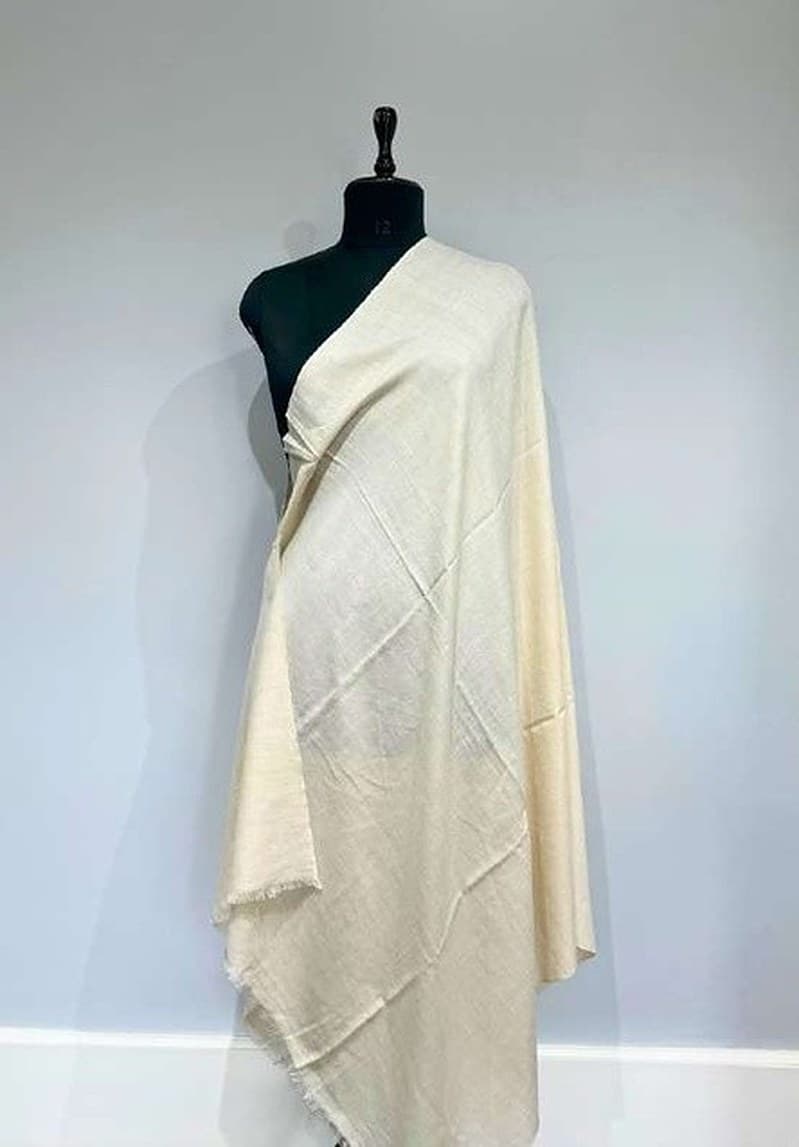
The two words are used interchangeably in shops, and that confusion is where most disappointment begins. All Pashmina is cashmere; very little cashmere is Pashmina. The difference lies in the goat, the fineness of the fibre, and — above all — in how the yarn is spun and woven.
Cashmere: the family
Cashmere is the soft undercoat of any cashmere goat, combed out each spring. It is produced in quantity in Mongolia, China, Iran and Afghanistan, and most of it is machine-spun and machine-woven or knitted into the sweaters and scarves of the world. Fibre diameter is typically 15–19 microns.
Pashmina: the finest member
Pashmina is cashmere from one animal in one place: the Changthangi goat of the high Changthang plateau of Ladakh, at over 4,000 metres, where winters reach minus 40. To survive, the goat grows an undercoat of extraordinary fineness — 12 to 16 microns, finer than most cashmere and far finer than a human hair.
That fineness is the whole point, and it comes with a consequence: the fibre is too delicate to be spun by machine without breaking. Genuine Kashmir Pashmina is therefore hand-spun on a wooden wheel, the yinder, and handwoven on a wooden loom in Kashmir.
The differences that matter
In practice, this is what separates a Pashmina from an ordinary cashmere shawl:
- Fibre — Pashmina 12–16 microns · general cashmere 15–19 microns
- Origin — Changthangi goats of Ladakh · cashmere goats worldwide
- Spinning — by hand on the yinder · by machine
- Weaving — by hand on wooden looms in Kashmir · by machine
- Certification — Kashmir Pashmina carries a GI tag · cashmere has no origin protection
- Character — softer, lighter and warmer for its weight, improving with age · smoother, more uniform, less warm per gram
'Pashmina' as a marketing word
Because there is no international legal definition, 'pashmina' is printed on viscose, acrylic and cashmere-silk blends alike. The word on a label means nothing. What means something is the GI tag — the Geographical Indication certification that guarantees a shawl was hand-spun and handwoven in Kashmir from Changthangi fibre — and the reputation of the atelier that sells it.
Which is better?
For everyday knitwear, machine-made cashmere is practical and good. For a shawl that is meant to be kept, gifted and inherited — that becomes softer every year and can carry months of hand embroidery — there is no comparison. Pashmina is the finer fibre, made the slower way, and it is the one with the heritage.
Questions
Is Pashmina the same as cashmere?
Pashmina is a type of cashmere — the finest — from the Changthangi goat of Ladakh, hand-spun and handwoven in Kashmir. Ordinary cashmere comes from cashmere goats worldwide and is usually machine-made.
Which is warmer, Pashmina or cashmere?
Weight for weight, Pashmina — its finer fibre traps more air, so a featherlight shawl is remarkably warm.
How can I tell if a Pashmina is genuine?
Look for the GI (Geographical Indication) tag certifying Kashmiri origin, a soft matte hand rather than a slippery shine, a fine handwoven texture with slight irregularities, and a reputable seller who states the fibre composition in writing.
From the atelier
Explore our pashmina
Every piece is made by hand in Kashmir, with its materials, dimensions and making time declared.