Buying guide · 7 min read
Kashmiri carpet vs Persian carpet: what is the difference?
By the IndoArtistry atelier ·
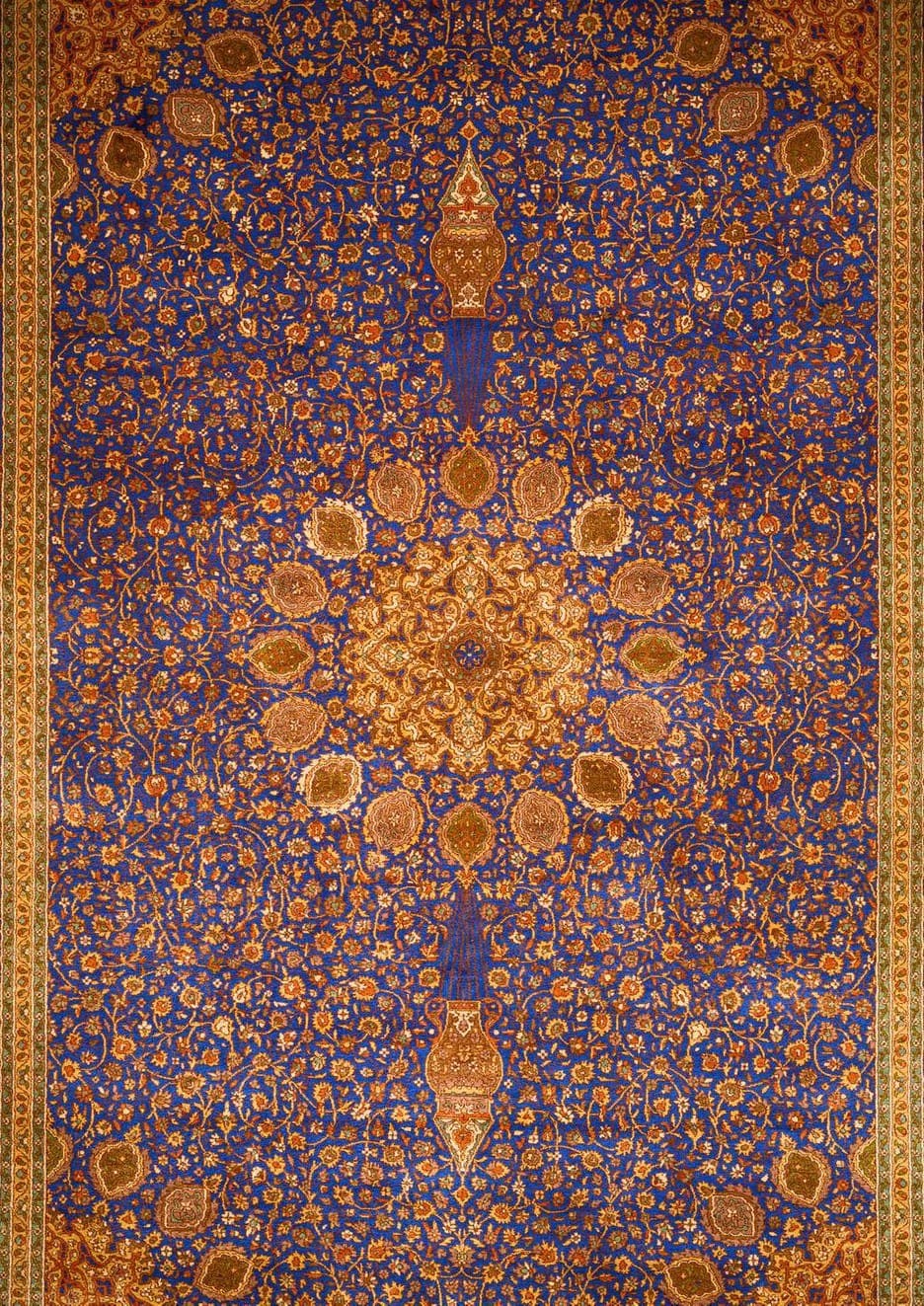
Kashmiri carpets are the descendants of Persian carpets — the craft arrived in the Valley with Persian master weavers in the fifteenth century — so the question is less which is 'better' than which is right for you. Here is how they differ in material, knotting, design and price, and what to look for in each.
Material: silk versus wool
The defining difference is material. Most Persian carpets are wool pile on a cotton foundation; silk Persian carpets exist — Qum and Isfahan make superb ones — but they are the exception. In Kashmir, silk is the norm: the finest carpets are silk pile on a silk foundation, and even the more everyday grade uses silk pile on cotton.
Silk gives a lustre and fineness that wool cannot, and it allows a far higher knot count. Wool gives warmth, resilience and a matte depth of colour, and wears better in heavy traffic.
Knot density
Because silk is so fine, Kashmiri carpets are knotted at densities most Persian carpets never approach. A good Persian wool carpet may have 150–300 knots per square inch; a Kashmiri silk-on-silk carpet is usually 576 (24 × 24) and can be commissioned up to 1,600 (40 × 40). Silk-on-cotton Kashmiri carpets sit at around 324.
Higher density means finer detail — individual leaves, the spots on a leopard, the features of a rider — and far more hours of work per square foot.
- Persian wool carpet — typically 150–300 knots per sq in
- Kashmiri silk on cotton — around 324 knots per sq in
- Kashmiri silk on silk — 576 knots per sq in as standard, up to 1,600
Design: how full is the field?
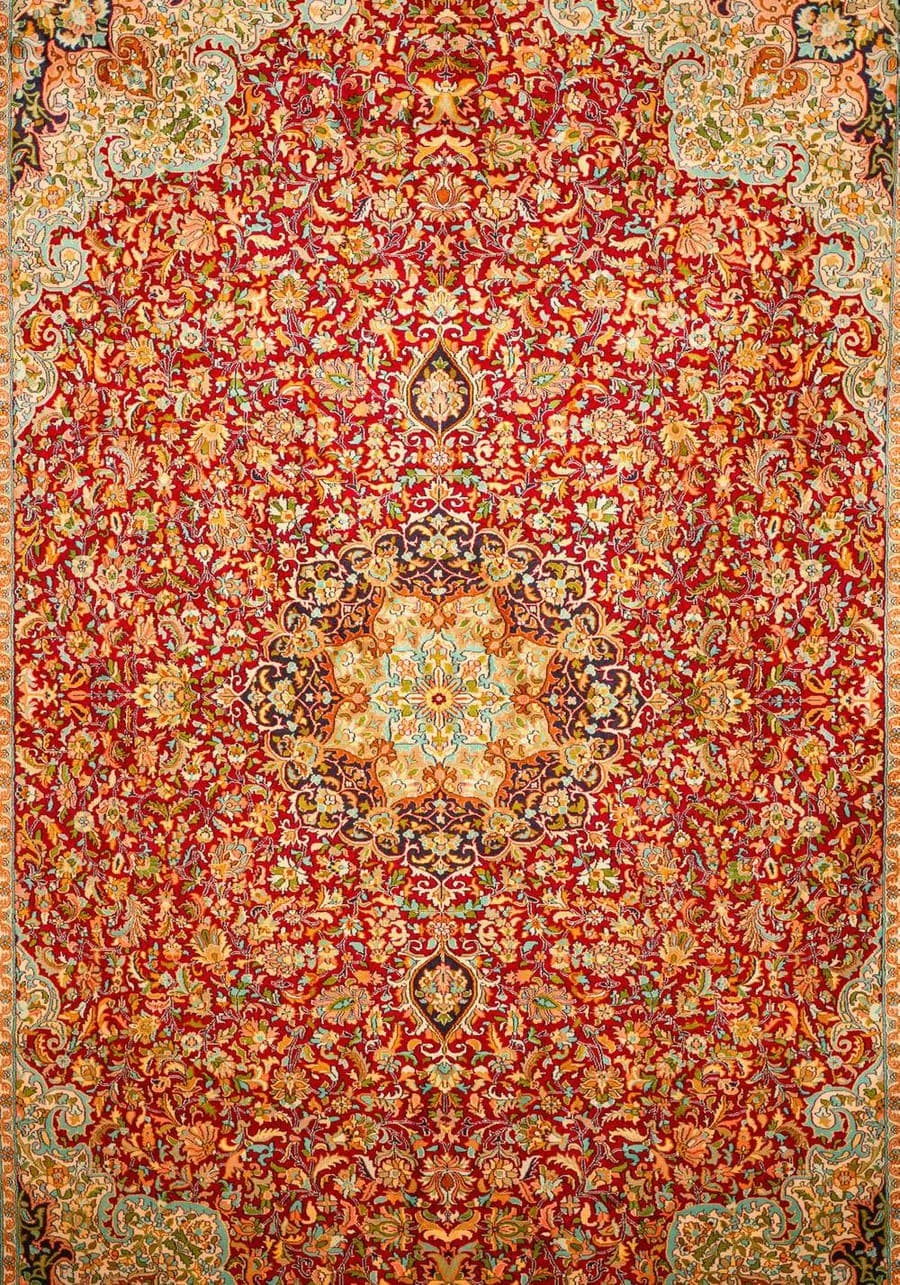
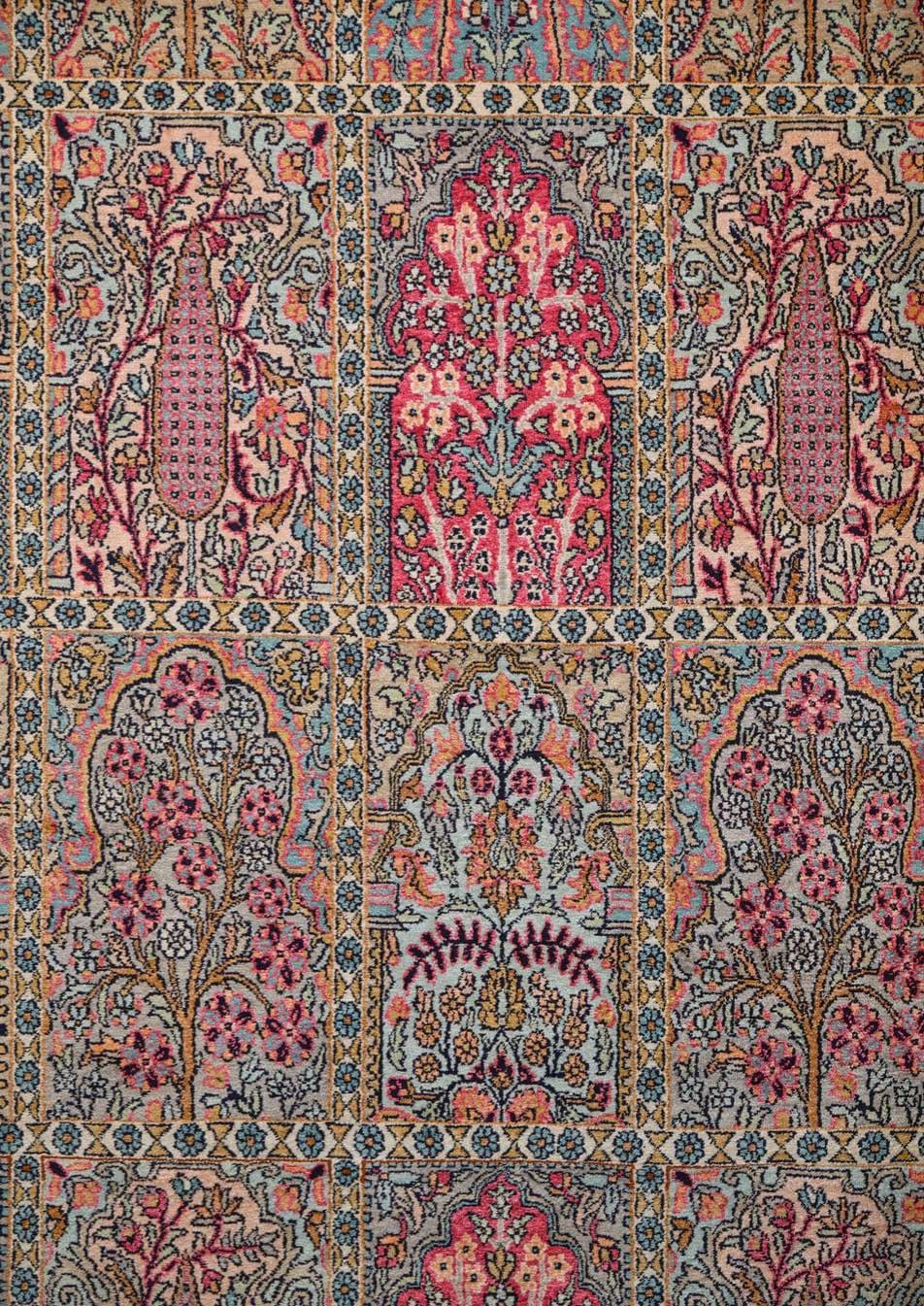
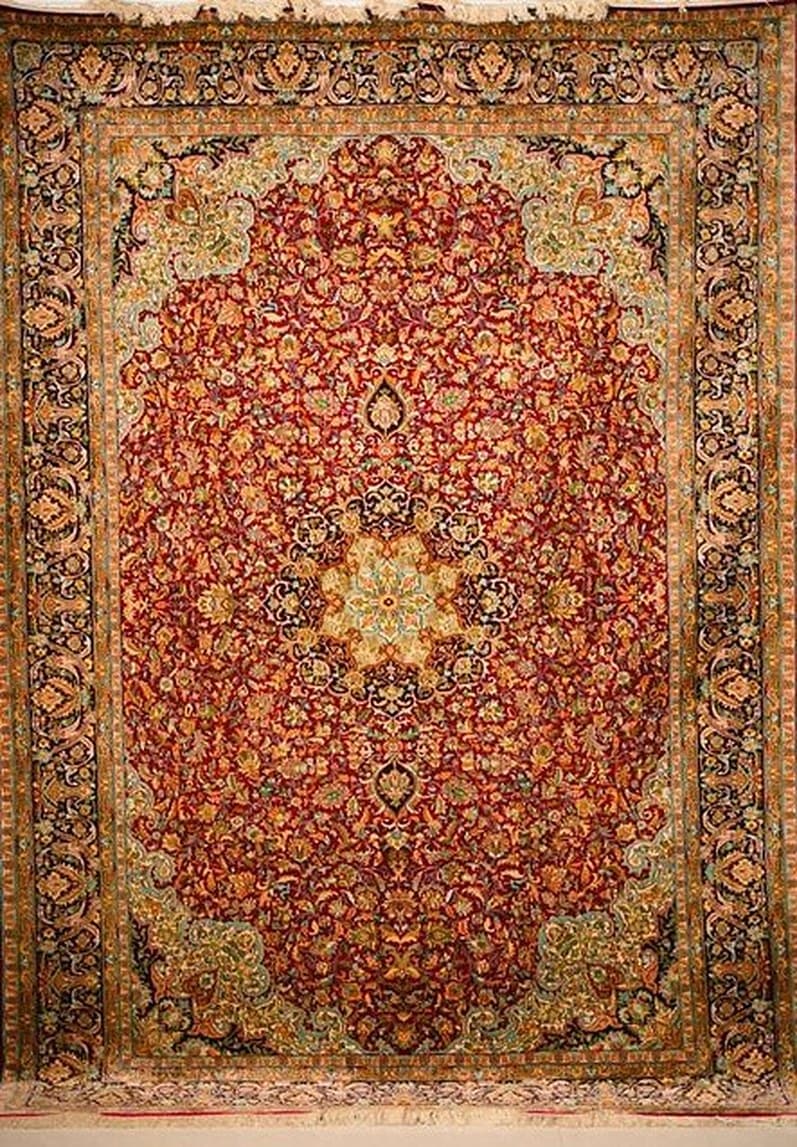
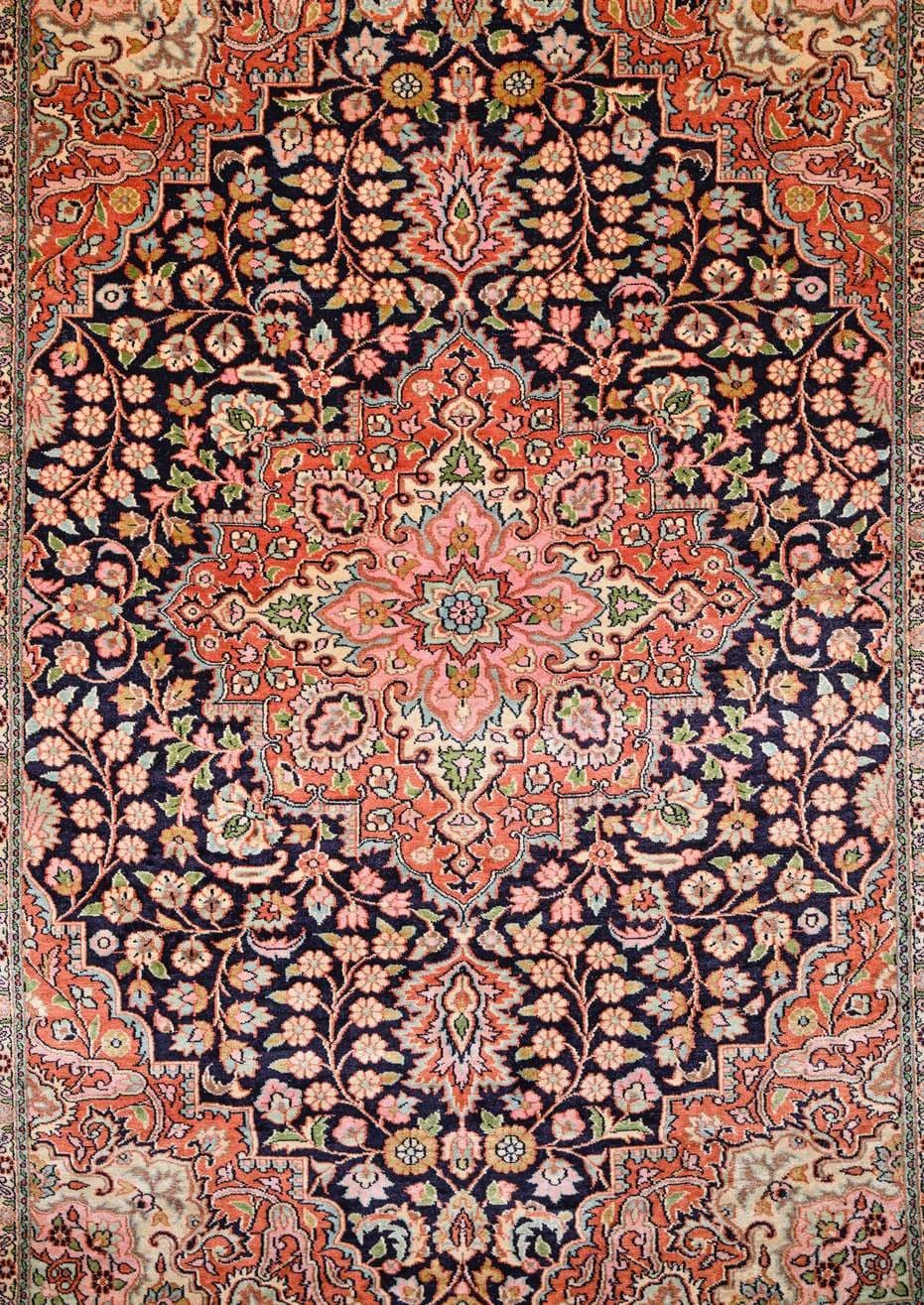
Both traditions use the same vocabulary — medallions, gardens, hunting scenes, the Tree of Life, the boteh. The Kashmiri hand fills the field more completely. Where a Persian Kashan leaves ground colour showing between its palmettes, a Kashmiri Kashan packs the field with blossom until the ground almost disappears — a taste inherited from the Mughal love of the garden.
Kashmiri carpets are also read from a written script, the talim, which records every knot's colour; this allows extremely intricate designs to be reproduced precisely and adapted for bespoke commissions.
Size and use
Persian carpets are most often made for the floor, in room sizes, and their wool pile is made to be walked on for a lifetime. Kashmiri silk carpets are made in every size, but their finest expressions are often smaller pieces — 2 × 3 ft to 6 × 9 ft — intended for a drawing room, a bedroom or the wall, where their fineness can be appreciated and their silk protected.
Silk on cotton is the Kashmiri answer for everyday floors: fuller in hand, more forgiving of traffic, and still hand-knotted in silk pile.
Price
Price follows hours. A Persian wool carpet and a Kashmiri silk carpet of the same size are not comparable objects: the silk piece may contain three to five times as many knots, in a material several times the cost of wool. Within Kashmir, silk on silk costs more than silk on cotton, and price rises steeply with knot density and design intricacy. Beware any 'Kashmiri silk' carpet priced like a wool rug — it is almost certainly viscose or machine-made.
Which should you choose?
Choose Persian wool for a hallway, a family living room, a dining room with daily use — anywhere warmth and resilience matter most. Choose Kashmiri silk for lustre, fineness and detail: a formal drawing room, a bedroom, a study, or a wall where the carpet is the artwork. Many of our clients own both, and use each where it belongs.
Questions
Are Kashmiri carpets better than Persian carpets?
Neither is 'better'. Kashmiri carpets are usually silk, finer and more densely knotted; Persian carpets are usually wool, warmer and more resilient underfoot. The right choice depends on the room and how it is used.
Why are Kashmiri silk carpets more expensive than Persian wool carpets?
Silk costs more than wool, and a silk-on-silk Kashmiri carpet contains far more knots per square inch — 576 or more against 150–300 for most Persian wool carpets — so each square foot represents many more hours of hand work.
Do Kashmiri carpets use the Persian knot?
Yes. Kashmiri weavers use the asymmetric Persian (Senneh) knot, introduced by the Persian master weavers who brought the craft to Kashmir in the fifteenth century.
From the atelier
Explore our silk carpets
Every piece is made by hand in Kashmir, with its materials, dimensions and making time declared.