Buying guide · 7 min read
What determines the price of a Kashmiri silk carpet?
By the IndoArtistry atelier ·
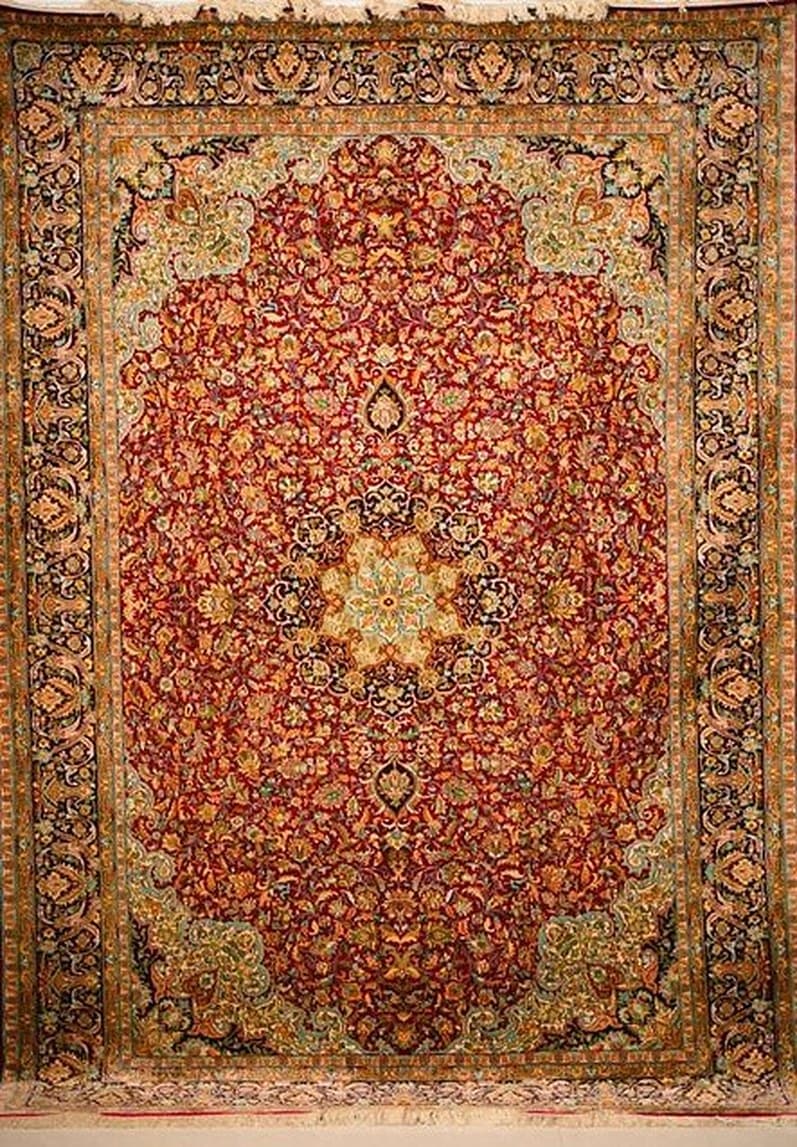
Two Kashmiri silk carpets of identical size can differ in price by a factor of five, and both can be honestly priced. The reason is that a hand-knotted carpet is priced by the hours inside it — and those hours are governed by a handful of choices. Here is what they are, so that you can read a price with understanding.
1. Knot density — the biggest factor
Every knot is tied by hand, so the number of knots is the number of hours. Doubling the knots per inch in each direction quadruples the knots in the carpet. A 6 × 9 ft carpet at 18 × 18 knots per square inch holds about 2.5 million knots; at 24 × 24 it holds 4.5 million; at 40 × 40, over 12 million. Each step up also demands a more skilled weaver and finer silk.
- 18 × 18 (324/sq in) — silk on cotton, the classic everyday grade
- 24 × 24 (576/sq in) — silk on silk, our signature grade
- 30 × 30 (900/sq in) — collector grade
- 40 × 40 (1,600/sq in) — museum grade, commissioned only
2. Silk on silk or silk on cotton
The foundation determines the density the weaver can reach, and silk costs many times more than cotton as a raw material. Silk on silk is always the higher investment for a given size; silk on cotton allows a larger carpet for the same budget. Neither is 'better' — they are for different rooms.
3. Size
Price scales with area, not length — a 9 × 12 ft carpet has twice the knots of a 6 × 9 ft one, and takes proportionally longer. Very large carpets are shared between several weavers at the loom, which shortens the calendar time but not the total hours.
4. Design intricacy and number of colours
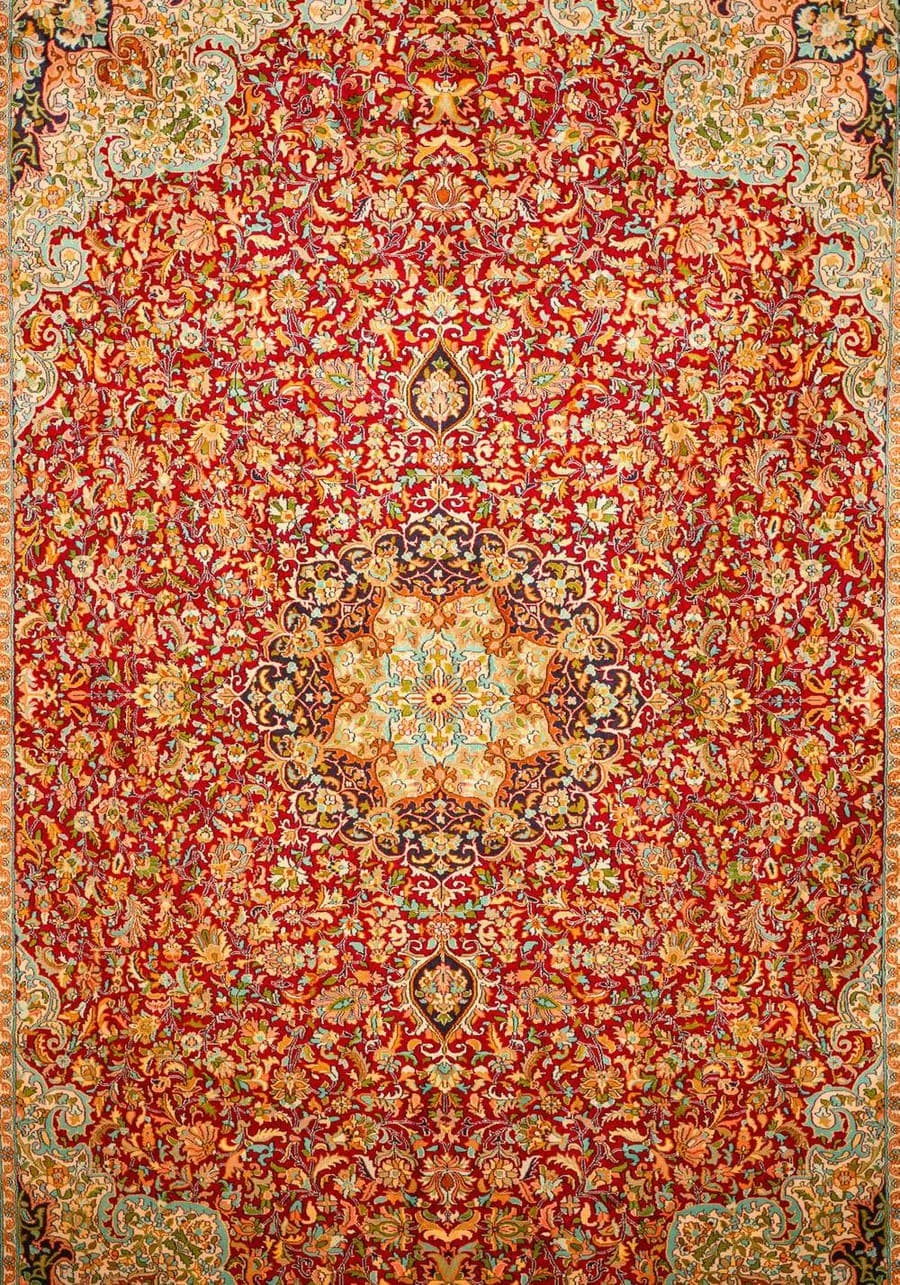
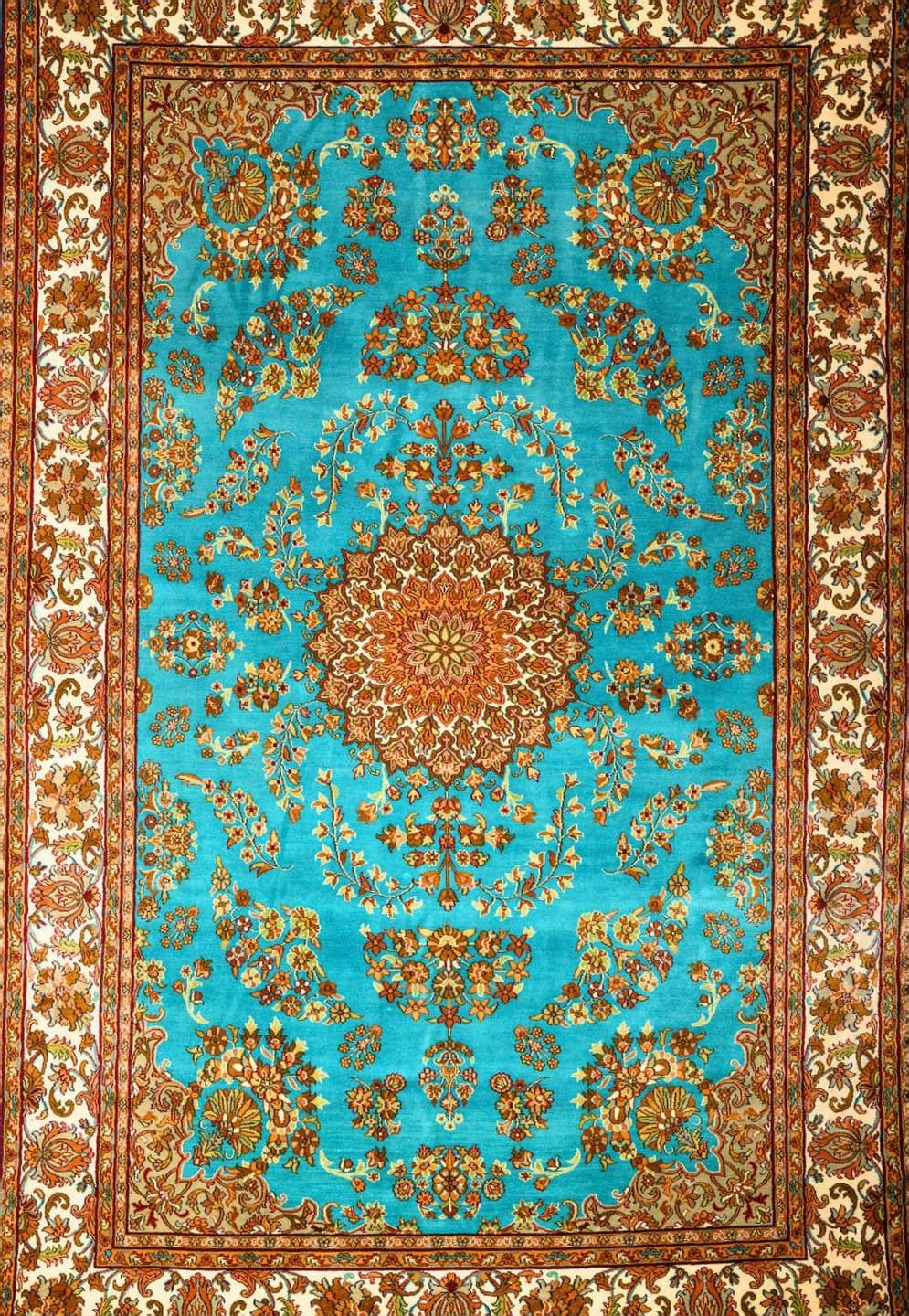
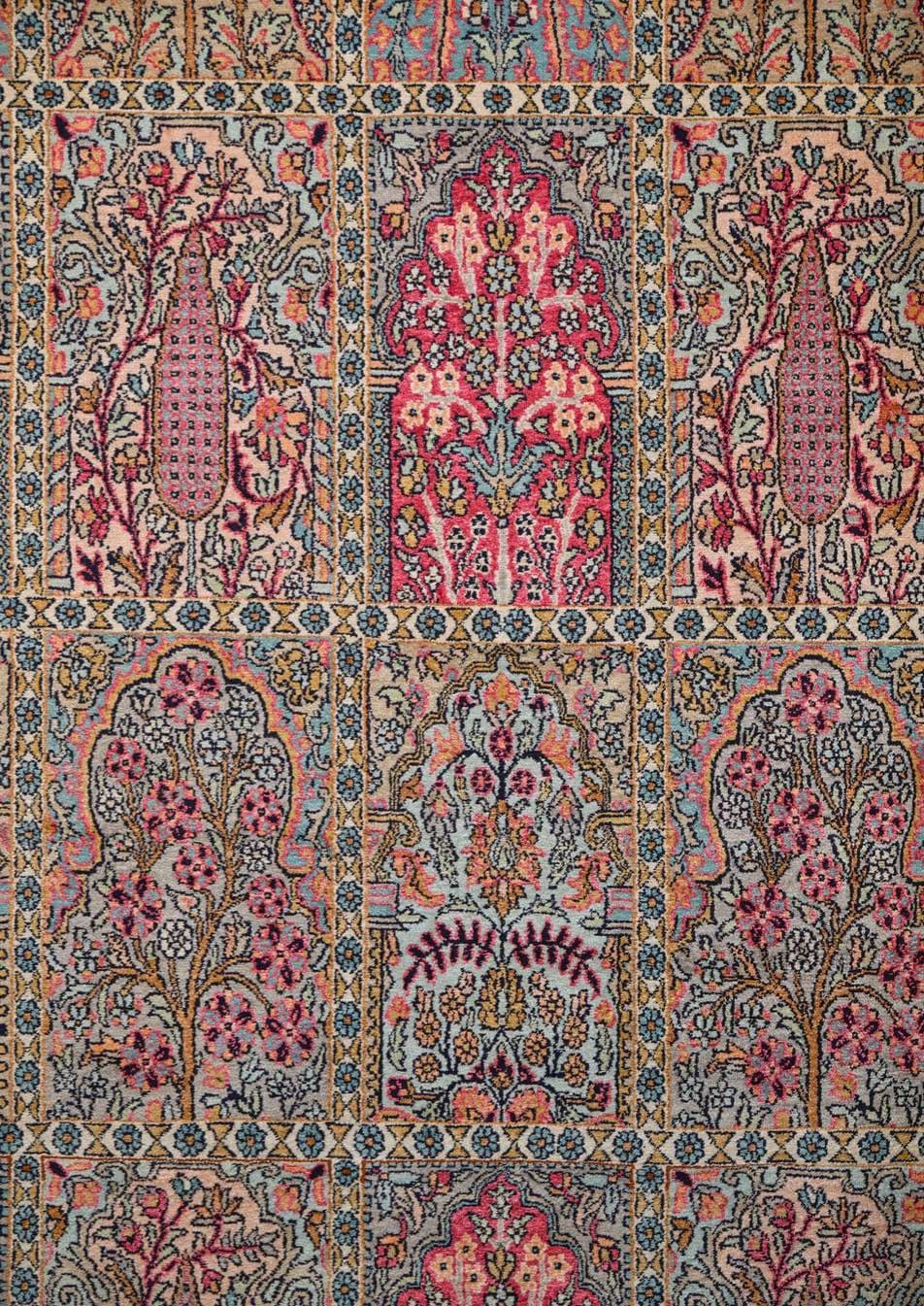
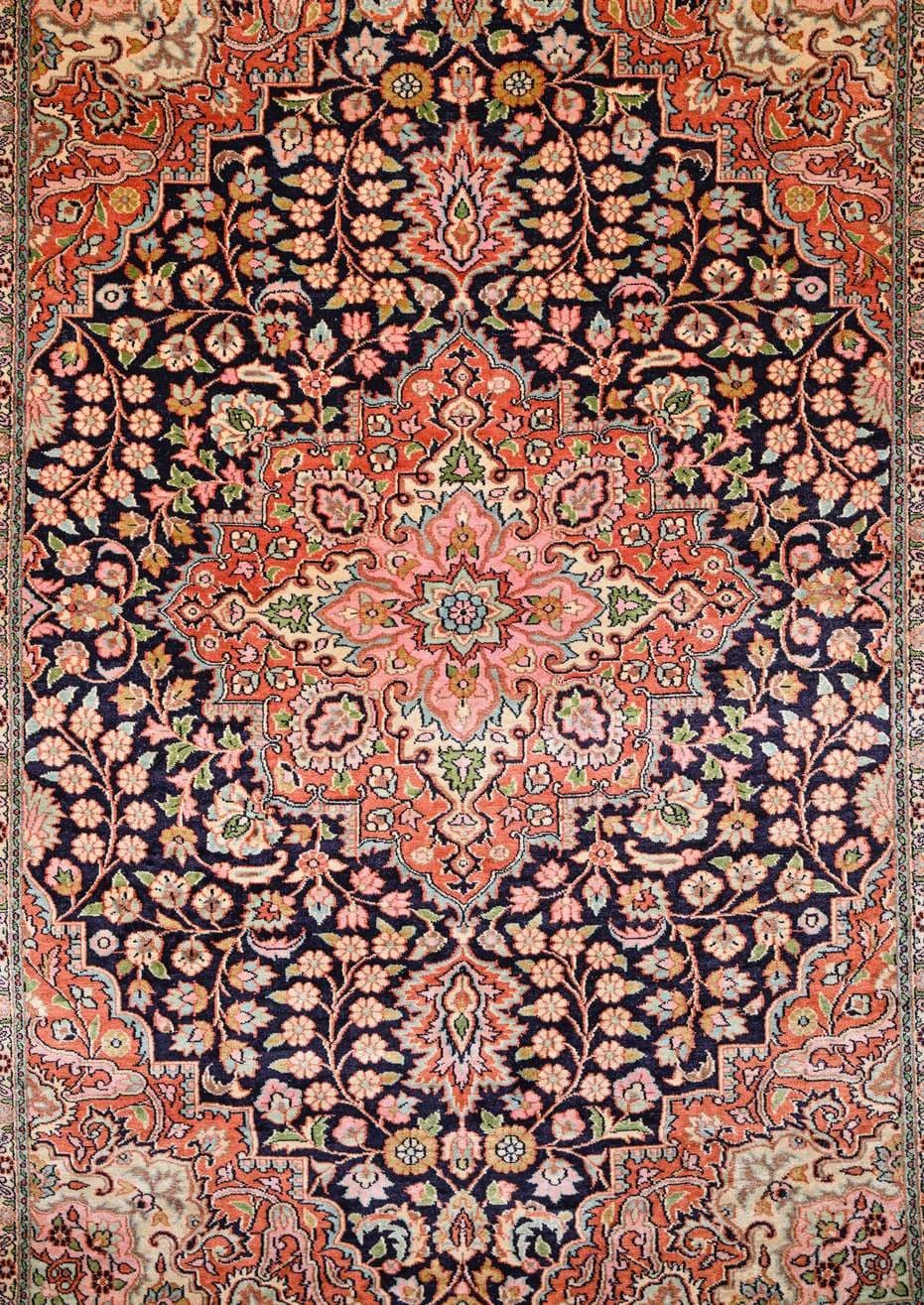
A design with fine curvilinear detail — a pictorial hunting scene, a dense Hazaar Posh field — takes longer per knot than a broad medallion on a plain ground, because the weaver changes colour constantly and must read the talim more closely. Each additional colour means another dyed silk to prepare and more changes at the loom. Pictorial carpets sit at the top of the range for this reason.
5. The weaver, and the workshop
A master weaver's carpet costs more than an apprentice's, and it should: the tension is even, the edges straight, the motifs precise. A carpet woven in a family workshop with quality control at every stage — dyeing, weaving, washing, finishing — carries the cost of that care. Price is also honest about provenance: a carpet with GI certification, hand-knotted in Kashmir, is a different object from an imitation knotted elsewhere.
What a fair price looks like
As a guide, our clients' commissions begin at a few thousand US dollars for a small silk-on-cotton piece and rise to the high tens of thousands for large silk-on-silk carpets and collector-grade commissions; museum-grade pieces are quoted individually. Every quotation states the weave, the knot density, the exact dimensions and the estimated months at the loom — so you can see precisely what you are paying for.
Be sceptical of the other direction. A 'hand-knotted silk' carpet priced like a machine rug is, in our experience, always viscose ('art silk'), machine-made, or both.
Why we quote privately
Because almost every carpet we make is adjusted to a client's room, palette or design, a list price would rarely be the real price. A short conversation — about the space, the use and the investment you have in mind — lets us quote accurately and, often, suggest a better piece for the money.
Questions
How much does a Kashmiri silk carpet cost?
It depends chiefly on knot density, silk-on-silk versus silk-on-cotton foundation, size and design intricacy. Small silk-on-cotton pieces begin at a few thousand US dollars; large silk-on-silk and collector-grade carpets reach the high tens of thousands. We quote each piece individually with its full specification.
Why are silk carpets so expensive?
Silk is costly as a material, and a silk carpet is knotted at far higher density than a wool one — 576 knots per square inch or more — so a single carpet represents many months of a skilled weaver's work.
Is a more expensive carpet always better?
Within honest hand-knotted carpets, price tracks knot density, material and intricacy closely. But the best carpet is the one suited to its room: a silk-on-cotton carpet is the better choice for a busy floor, whatever the price of the alternative.
From the atelier
Explore our silk carpets
Every piece is made by hand in Kashmir, with its materials, dimensions and making time declared.