Buying guide · 6 min read
Silk on silk vs silk on cotton: which Kashmiri carpet should you choose?
By the IndoArtistry atelier ·
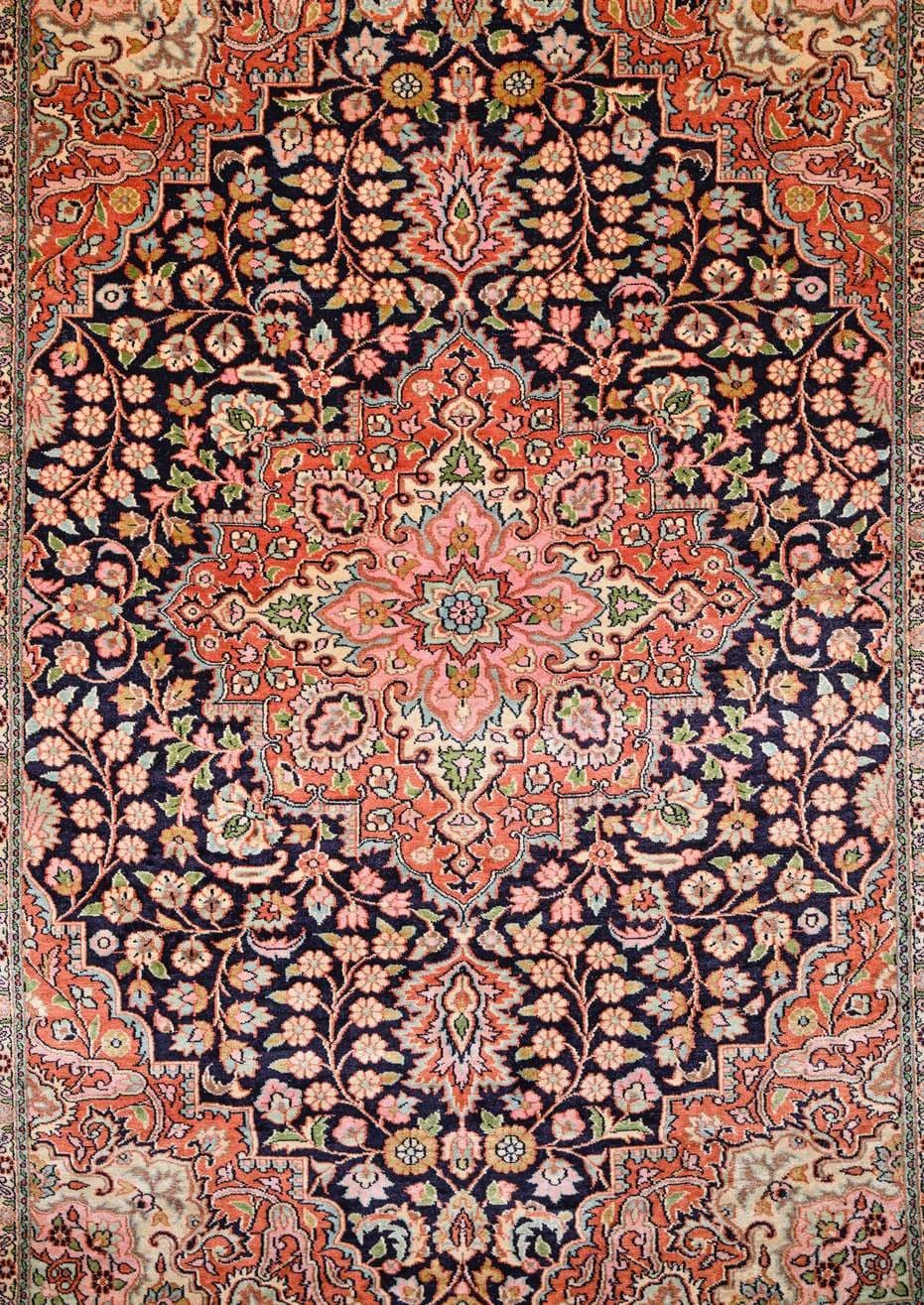
Every Kashmiri silk carpet has a silk pile — the surface you see and touch. What differs is the foundation beneath it: the warp and weft threads the knots are tied onto. Silk on silk uses a silk foundation; silk on cotton uses cotton. That one difference changes the density, the sheen, the hand and the price of the carpet.
What 'silk on silk' means
In a silk-on-silk carpet, warp, weft and pile are all silk. Because silk thread is so fine, the warps can be set very close together, and the weaver can tie 24 × 24 knots per square inch as standard — 576 knots — and up to 40 × 40 for museum-grade pieces. The result is a thin, supple carpet with a smooth, tight surface and a deep lustre, because light reflects from silk in every layer.
What 'silk on cotton' means
In a silk-on-cotton carpet the foundation is cotton and only the pile is silk. Cotton warps are thicker, so the weave is set at around 18 × 18 knots per square inch — 324 knots. The carpet is thicker and heavier in the hand, with a fuller pile, a gentler sheen and a slightly softer definition of detail.
Side by side
The practical differences, in brief:
- Knot density — silk on silk: 576 to 1,600 per sq in · silk on cotton: about 324
- Detail — silk on silk renders the finest motifs; silk on cotton is slightly softer in outline
- Sheen — silk on silk: rich, lustrous · silk on cotton: moderate
- Hand — silk on silk: thin, light, supple · silk on cotton: thicker, heavier, fuller
- Strength — the silk foundation is stronger and longer-lived; cotton is durable but less so
- Time — a 6 × 4 ft carpet: about 6.5 months in silk on silk, 6 months in silk on cotton
- Price — silk on silk is the higher investment for the same size
Which rooms suit which
Silk on silk belongs where it will be seen and admired more than trodden: a formal drawing room, a bedroom, a study, beneath a dining table used for occasions, or on the wall. It is the choice for the finest, most detailed designs — pictorial carpets, dense medallions, museum-grade commissions.
Silk on cotton is the carpet for daily life: a family living room, a hallway or corridor as a runner, a bedroom that is walked through every morning. Its fuller pile is warmer underfoot and more forgiving, and its price allows a larger carpet for the same investment.
How to tell them apart
Look at the fringe: it is the foundation showing. Silk fringe is fine, lustrous and slightly slippery; cotton fringe is matte and softer. Turn the carpet over and count the knots per inch — 22 or more means a silk foundation. Feel the weight: silk on silk is noticeably lighter and thinner for its size.
A reputable atelier states the foundation in writing. If a seller cannot tell you whether a carpet is silk on silk or silk on cotton, walk away.
Questions
Is silk on cotton a real silk carpet?
Yes — the pile, which is everything you see and touch, is pure silk. Only the foundation threads beneath it are cotton. It is a genuine hand-knotted silk carpet, made at a lower density than silk on silk.
Which lasts longer, silk on silk or silk on cotton?
Silk on silk. The silk foundation is stronger than cotton, and the tighter weave holds the pile more securely. Both will last generations with proper care.
How many knots per square inch is a silk-on-silk carpet?
Usually 24 × 24, or 576 knots per square inch. Finer grades are commissioned at 30 × 30 (900) and up to 40 × 40 (1,600).
From the atelier
Explore our silk carpets
Every piece is made by hand in Kashmir, with its materials, dimensions and making time declared.