Buying guide · 6 min read
Kashmiri walnut wood carving: a buyer's guide to furniture and objects
By the IndoArtistry atelier ·
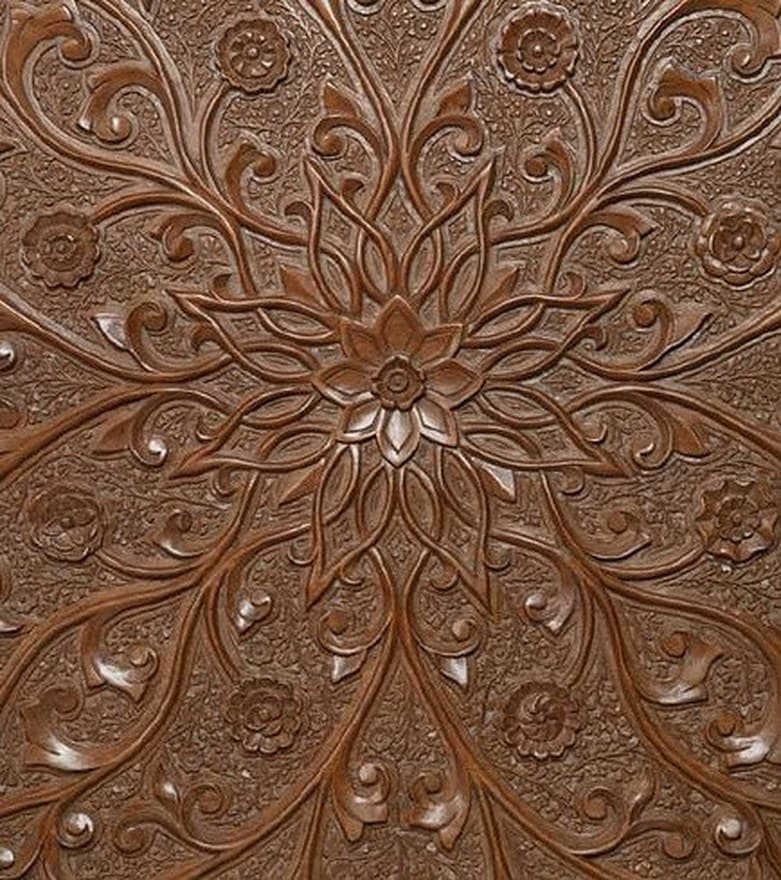
Kashmir is the only region of India where the walnut tree grows, and the only one with a carving tradition built around it. Walnut furniture from the Valley — screens, tables, cabinets, chairs and small objects — is carved by families who have worked the wood for generations. This is what to look for.
Why walnut
Juglans regia, the Kashmiri walnut, is close-grained, strong and stable, with a natural sheen and a colour that deepens from honey to dark brown as it ages. It carves cleanly in every direction, which is what allows the fine undercut work Kashmir is known for. The wood is seasoned for years before it is cut, so that finished pieces neither warp nor split.
The carving styles
Kashmiri carvers work in several distinct techniques, often combining them on a single piece:
- Fine carving (khokerdar) — shallow, detailed floral work covering a surface, as on our tissue boxes and jewellery cabinets
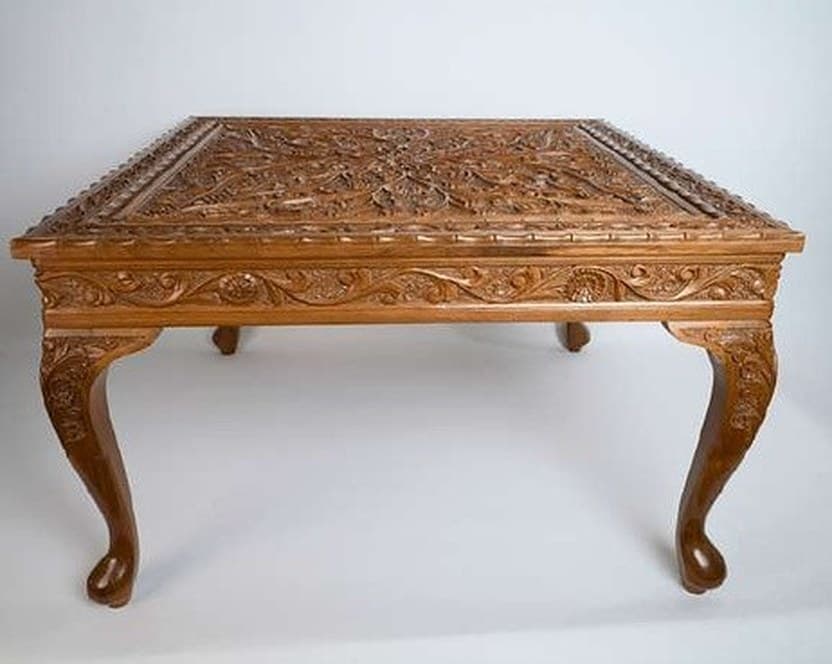
- Deep carving (vaboraveth) — high relief with strong shadows, as on the round lidded bowl and the centre table
- Undercut (jalidar) — the most demanding: motifs carved free of the ground so they stand in the round
- Lattice (jali) — open fretwork for screens and panels, letting light through
- Plain and semi-carved — carved borders and motifs on otherwise plain surfaces, for a quieter room
The motifs
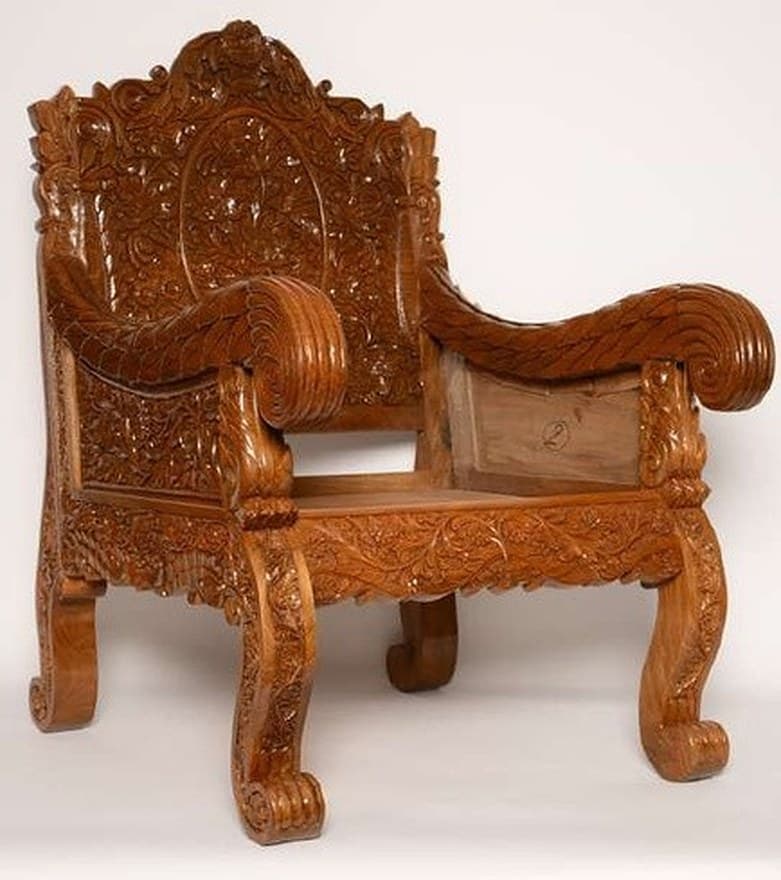
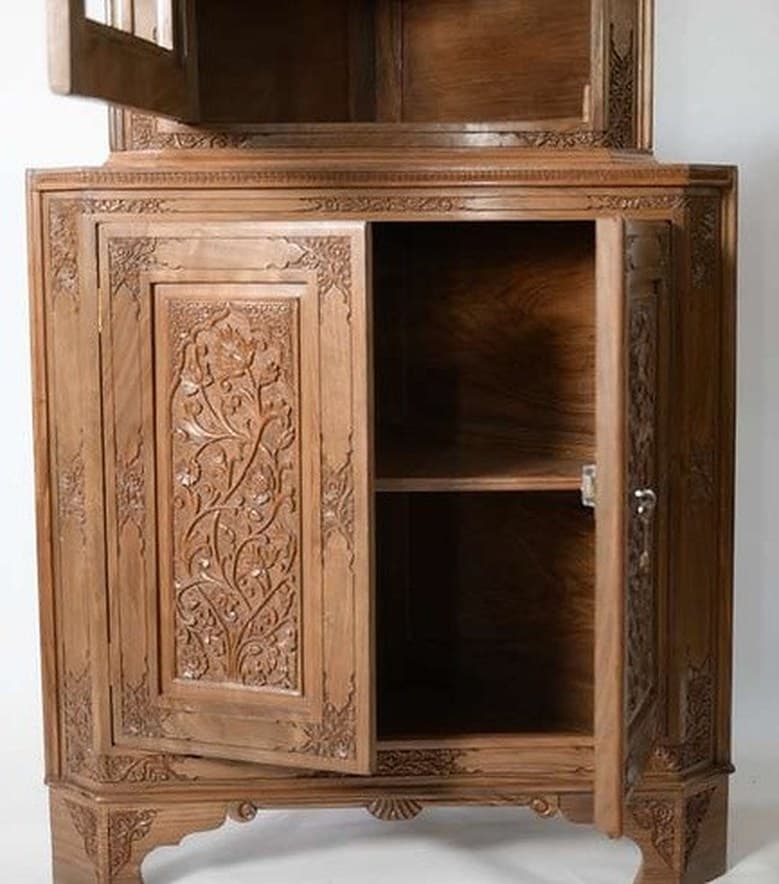
Chinar leaves, roses, lotus, the almond (badam), grapevines, the Tree of Life and the dragon are the classical subjects. On the finest work — a chair back, a cabinet door — the carver composes them into a single design rather than repeating a pattern.
Judging quality
Look at the depth and crispness of the carving: edges should be sharp, backgrounds clean, and undercut motifs genuinely free of the ground. Turn a piece over — good work is finished on the underside too. Check the joints of furniture; the best pieces use traditional joinery, and the most extraordinary are carved from a single block with no joints at all, as our horse is. Finally, the wood: solid walnut throughout, never veneer over a cheaper timber.
What to commission
Screens and room dividers, carved on both faces. Centre and side tables. Bedside chests. Mirror and picture frames. Wall panels and headboards. Doors and door surrounds for a special room. Boxes, trays and desk objects as gifts. Sculpture — horses, birds — from the solid. Bring a reference or a sketch; our carvers work to any drawing.
Care
Dust with a soft brush to reach into the carving. Wax lightly once or twice a year with a good beeswax polish; never use silicone sprays. Keep pieces away from radiators and direct sun, and in very dry climates consider a humidifier in the room — walnut, like all wood, prefers a steady humidity.
Questions
Is Kashmiri walnut furniture solid wood?
Genuine pieces are carved from solid seasoned Kashmiri walnut throughout. Beware veneered or mixed-timber pieces sold as walnut — ask the seller to confirm in writing.
What is undercut carving?
Undercut, or jalidar, carving frees the motifs from the background so that leaves and flowers stand in the round, with the ground carved away beneath them. It is the most demanding Kashmiri carving technique.
How do I care for carved walnut?
Dust with a soft brush, wax lightly once or twice a year, and keep the piece away from direct heat and sunlight.
From the atelier
Explore our walnut carving
Every piece is made by hand in Kashmir, with its materials, dimensions and making time declared.