Craft guide · 5 min read
The Kashmiri samovar: what it is, how it is used, and how to choose one
By the IndoArtistry atelier ·
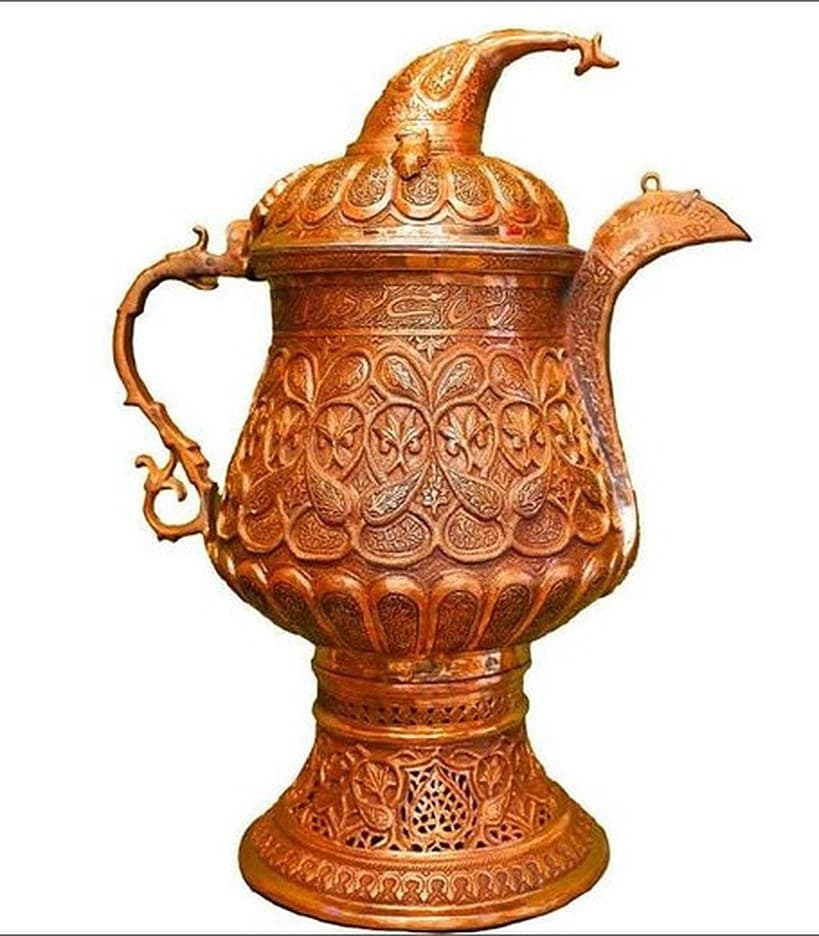
No object says Kashmir like the samawaar. A copper urn with a fire in its belly, it has warmed the Valley's kitchens and hospitality for centuries — and today, hand-hammered and engraved, it is the most characterful piece of Kashmiri craft you can bring to a table.
Where it comes from
The samovar travelled the trade routes of Central Asia — its cousins are found from Russia to Iran — and settled in Kashmir with its own form and its own engraving. The Kashmiri version is tall and waisted, with a domed lid, a spout, a hinged handle and the distinctive engraved surface of the naqash.
How it works
Inside the samawaar is a vertical chamber — the fire pot — filled with glowing charcoal. Water surrounds it, and tea is brewed in the water itself: green tea leaves, cardamom, cinnamon, saffron and almonds for kahwa; salt, milk and baking soda for the pink noon chai. The charcoal keeps the tea hot through a long conversation, which is the point of the thing.
Decorative samovars are made without a working fire chamber, or with the chamber sealed; tell us which you would like.
Copper, Naqashi and Ruqai
The body is raised by hand from copper sheet, then engraved by the naqash with chinar leaves, paisleys and vines — days of work on a fine piece. For use with tea, the inside is traditionally tinned (kalai). For a regal finish the whole samovar can be silver-coated — Ruqai — which is food-safe, naturally anti-bacterial and mirror-bright, and the finish preferred for ceremonial and gift pieces.
Choosing one
A few questions decide it:
- For use or display? A working samovar needs a fire chamber and a tinned interior; a display piece can be lighter
- Copper or silver-coated? Natural copper is warm and traditional; Ruqai silver is formal and easier to keep bright
- Size — from a small samovar for two to large ceremonial pieces for a gathering
- Engraving — dense all-over Naqashi, or bands of engraving on plain copper
- Personalisation — a crest, a name or calligraphy can be engraved to order
Care
Copper darkens naturally; polish with a proper copper cleaner or lemon and salt, then rinse and dry immediately. Silver-coated pieces need only a soft cloth and an occasional silver polish. Empty and dry a working samovar after use, and never leave water standing in it.
Questions
What is a samawaar?
The samawaar is the Kashmiri samovar — a copper urn with a central charcoal chamber used to brew and keep hot kahwa (saffron green tea) and noon chai (pink salted tea). It is hand-hammered and engraved in the Naqashi tradition.
Can a Kashmiri samovar be used to make tea?
Yes, if it is made with a working fire chamber and a tinned or silver-coated interior. Decorative samovars are also made purely for display. Tell us how you intend to use it and we will finish it accordingly.
What is the difference between copper and silver-coated samovars?
Both are hand-hammered copper. A Ruqai silver coating adds a mirror-bright, food-safe surface that is easier to keep polished; natural copper has a warmer, traditional look that darkens gently with age.
From the atelier
Explore our copperware
Every piece is made by hand in Kashmir, with its materials, dimensions and making time declared.