Buying guide · 7 min read
How to identify a genuine hand-knotted Kashmiri silk carpet
By the IndoArtistry atelier ·
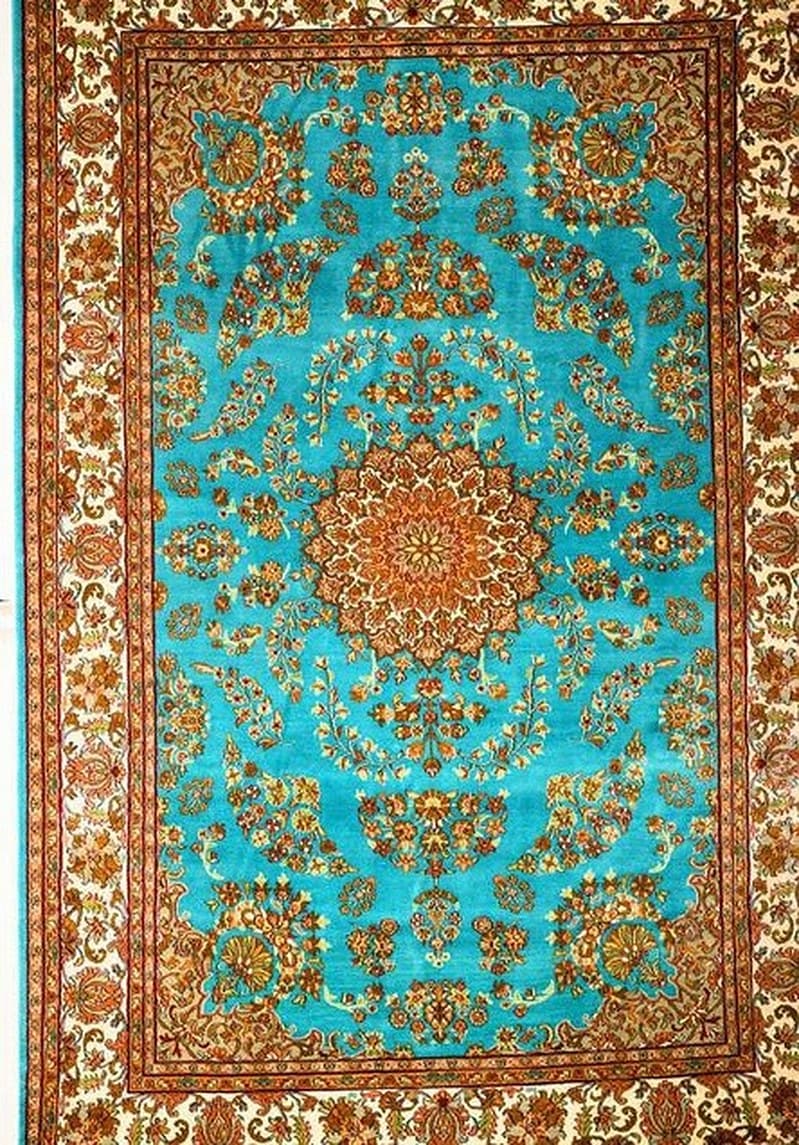
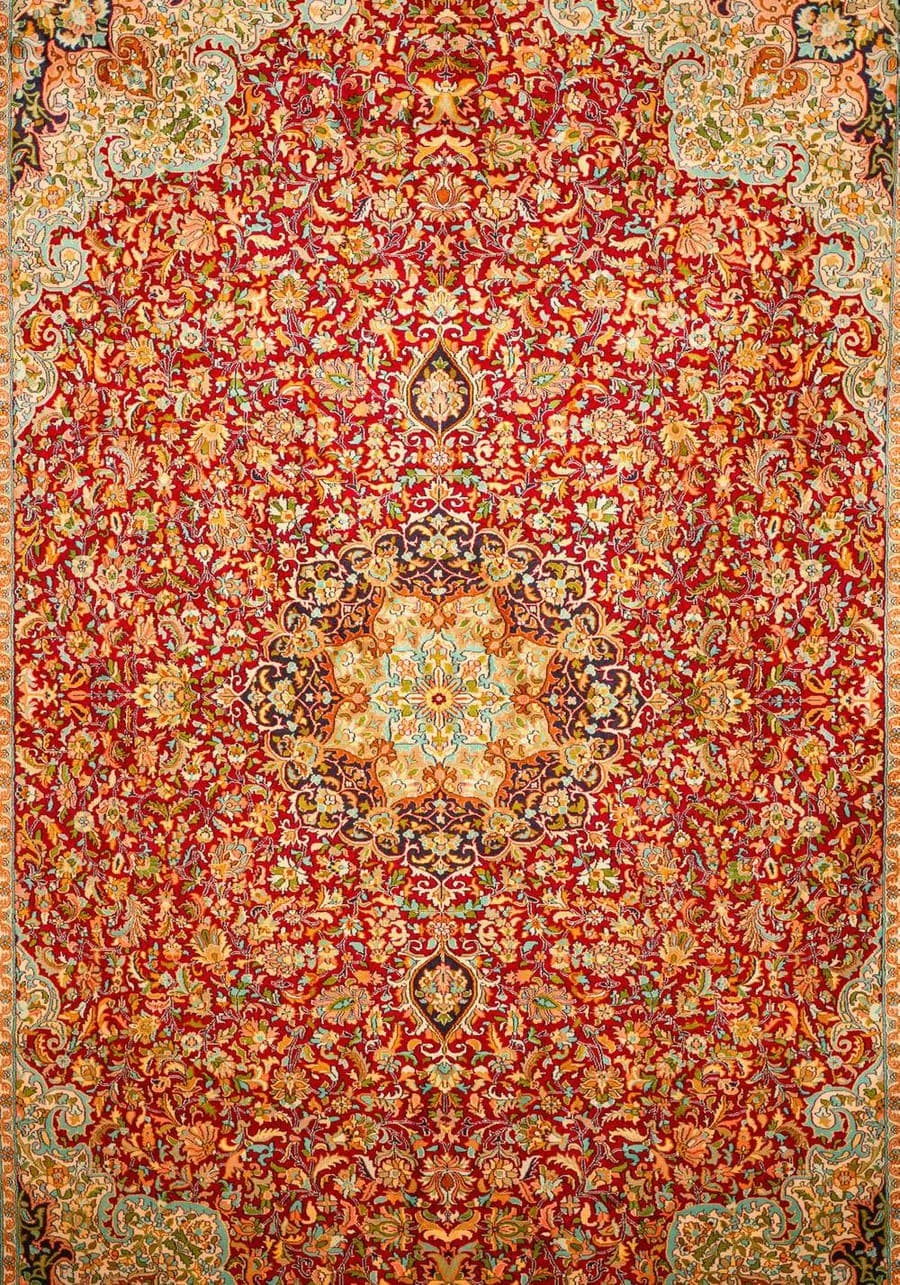
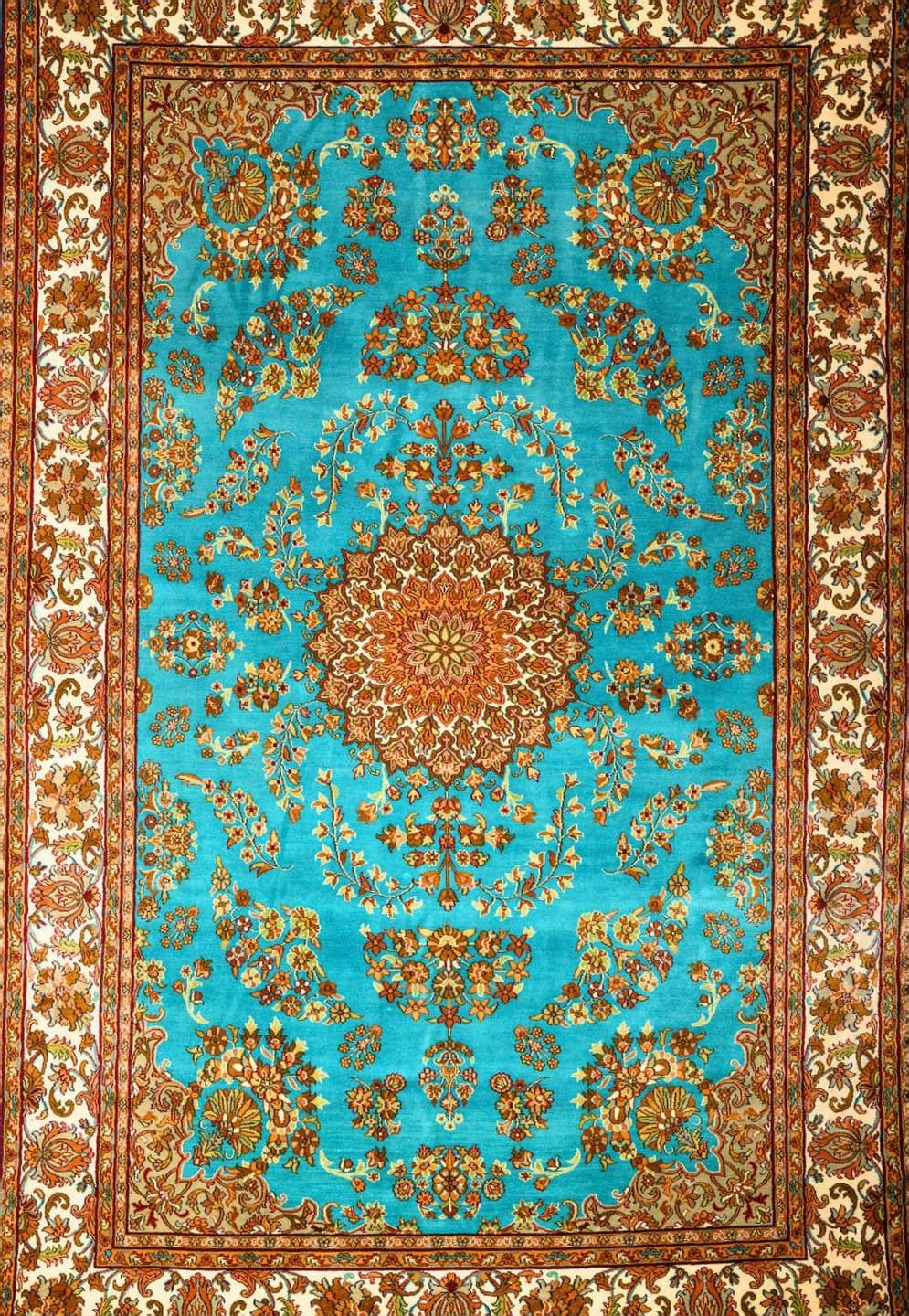
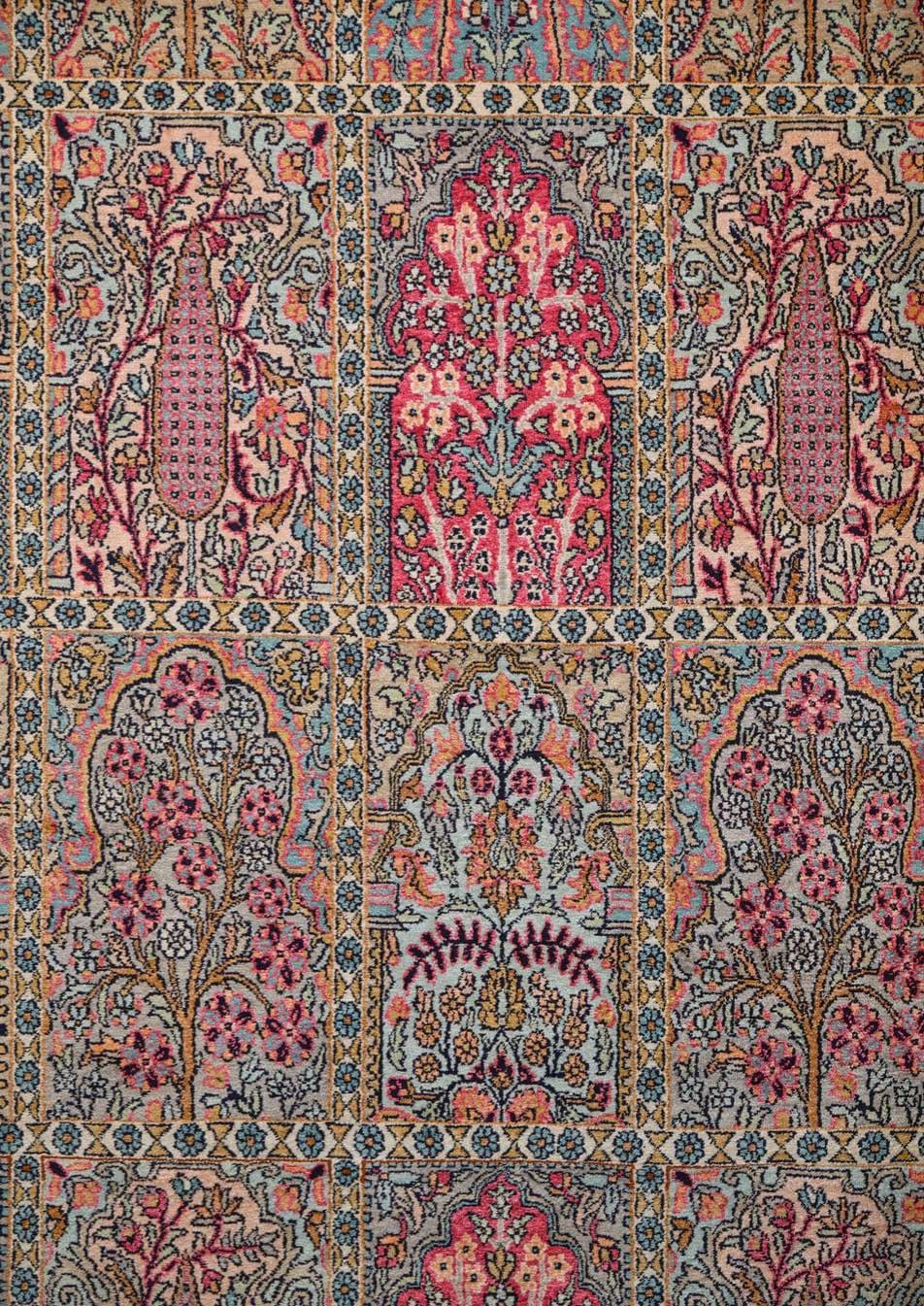
A hand-knotted Kashmiri silk carpet can take a master weaver the better part of a year. Imitations — machine-woven, printed, or made of viscose 'art silk' — can look similar in a photograph. These are the checks our own weavers use, and that you can use before investing in any carpet.
1. Turn the carpet over
The back of a hand-knotted carpet is the most honest part of it. Because every knot is tied individually around the warp threads, the full design is visible on the reverse — nearly as crisp as the front, with tiny irregularities where a weaver's hand has varied the tension.
A machine-made carpet shows a perfectly uniform grid, often with visible straight lines of weft running across. A tufted rug usually hides its back under a glued fabric or latex backing. If the back is covered, ask why.
2. Look at the fringe
On a hand-knotted carpet the fringe is not decoration — it is the end of the warp threads that run through the entire carpet, the foundation onto which every knot was tied. Follow a fringe thread with your eye and it should disappear into the body of the carpet.
A fringe that has been sewn or glued on as a separate strip is a sign of machine production.
3. Count the knots
Knot density is the single best measure of fineness. On the back, count the knots along one inch horizontally, then along one inch vertically, and multiply. A carpet with 24 knots each way has 576 knots per square inch.
Kashmiri silk-on-silk carpets are usually woven at 22 × 22 or 24 × 24, and exceptional pieces can be commissioned up to 40 × 40. Silk-on-cotton carpets are usually 18 × 18, or 324 knots per square inch.
- 18 × 18 = 324 knots per sq in — classic silk on cotton
- 24 × 24 = 576 knots per sq in — signature silk on silk
- 30 × 30 = 900 knots per sq in — collector grade
- 40 × 40 = 1,600 knots per sq in — museum grade
4. Make sure the silk is silk
Many carpets sold as 'silk' are made of viscose or mercerised cotton, often called art silk or bamboo silk. They shine beautifully when new, but they are weaker, crush and stain easily, and hold none of the value of real silk.
Real silk feels cool and smooth, with a lustre that changes as you walk around the carpet. Ask the seller to state the pile and foundation materials in writing. A reputable atelier will never be vague about whether a carpet is silk on silk, silk on cotton or something else.
5. Expect the marks of the hand
Perfect symmetry is a warning sign, not a virtue. Hand-knotted carpets show slight variations in colour between batches of dyed silk (known as abrash), a border that is fractionally wider on one side, or a motif that shifts by a knot or two. These are the signature of a human maker.
6. Check the GI tag
Kashmiri hand-knotted carpets are protected by a Geographical Indication (GI) tag. Only carpets hand-knotted in Kashmir using traditional techniques may legally be called Kashmiri carpets. Ask whether a carpet carries GI certification, and what documentation comes with it.
7. Be realistic about price
A 6 × 9 ft silk-on-silk carpet at 576 knots per square inch contains roughly 4.5 million hand-tied knots and about ten months of a master weaver's time. When a 'hand-knotted silk' carpet of that size is offered for the price of a machine rug, it is not a bargain — it is not what it claims to be.
Questions
How many knots does a Kashmiri silk carpet have?
Silk-on-silk Kashmiri carpets are usually woven at 24 × 24 knots per square inch (576 knots) and can be commissioned up to 40 × 40 (1,600 knots). Silk-on-cotton carpets are usually 18 × 18, or 324 knots per square inch.
How long does it take to make a Kashmiri silk carpet?
It depends on size and density. As a guide, a 2 × 3 ft silk-on-silk carpet takes around four months and a 6 × 9 ft silk-on-silk carpet around ten months of hand-knotting.
Is the design visible on the back of a hand-knotted carpet?
Yes. Because each knot is tied individually, the complete design shows clearly on the reverse of a hand-knotted carpet, with slight irregularities from the weaver's hand.
From the atelier
Explore our silk carpets
Every piece is made by hand in Kashmir, with its materials, dimensions and making time declared.