Craft guide · 8 min read
How a Kashmiri silk carpet is made: from silk to talim to loom
By the IndoArtistry atelier ·
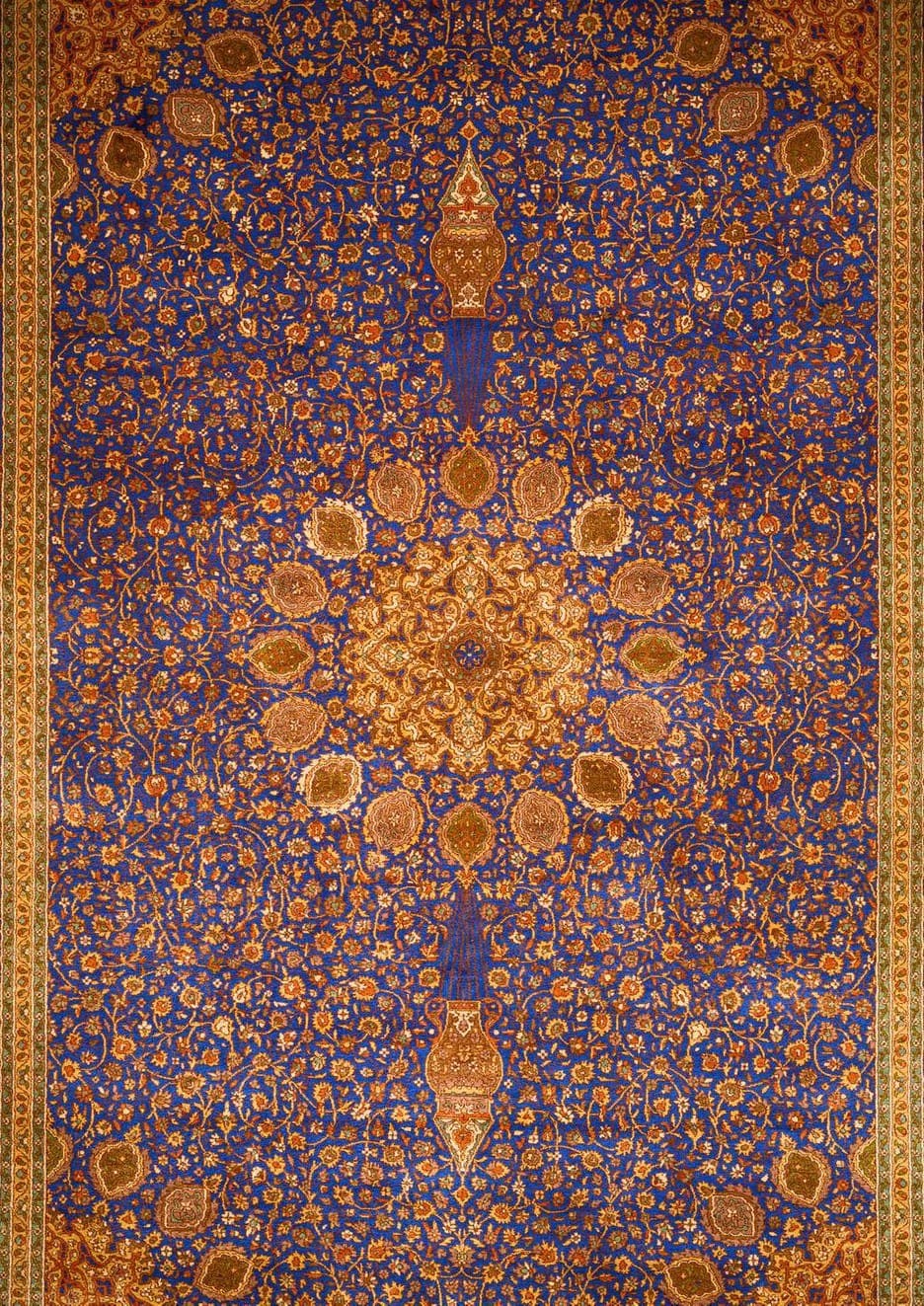
A Kashmiri silk carpet is made the way it was made five hundred years ago: by hand, from a coded script, one knot at a time. This is the process behind every carpet we offer — and the reason a 6 × 9 ft silk-on-silk carpet takes the better part of a year.
1. The naqsha — drawing the design
Everything begins with the naqash, the designer. He draws the carpet at full scale on graph paper, each square a knot, in colour. A classical design may come from a workshop's archive of naqshas passed down through generations; a bespoke commission is drawn afresh — to the client's dimensions, palette and motifs — and approved before anything else happens.
2. The talim — writing the code
The naqsha is then translated into the talim: a written script, unique to Kashmir, in which each line of the carpet is recorded as a sequence of symbols meaning 'so many knots of this colour, then so many of that'. The talim-writer works row by row through the whole carpet.
At the loom, a reader chants the talim aloud and the weavers tie exactly what they hear. This is how a design of millions of knots is reproduced without error — and how the same naqsha can be woven again, years later, precisely.
3. Silk and dye
Mulberry silk is reeled, twisted into yarn and dyed by the workshop's dyer, colour by colour, to the palette on the naqsha. Slight variation between dye batches — called abrash — is a mark of the hand and gives an old-fashioned depth to the field.
4. Dressing the loom
The vertical loom is warped with silk (for silk on silk) or cotton (for silk on cotton) threads set at the chosen density — 18, 24, 30 or more to the inch. Warping alone can take days for a fine carpet, and the tension must be perfectly even across the width.
5. Knotting
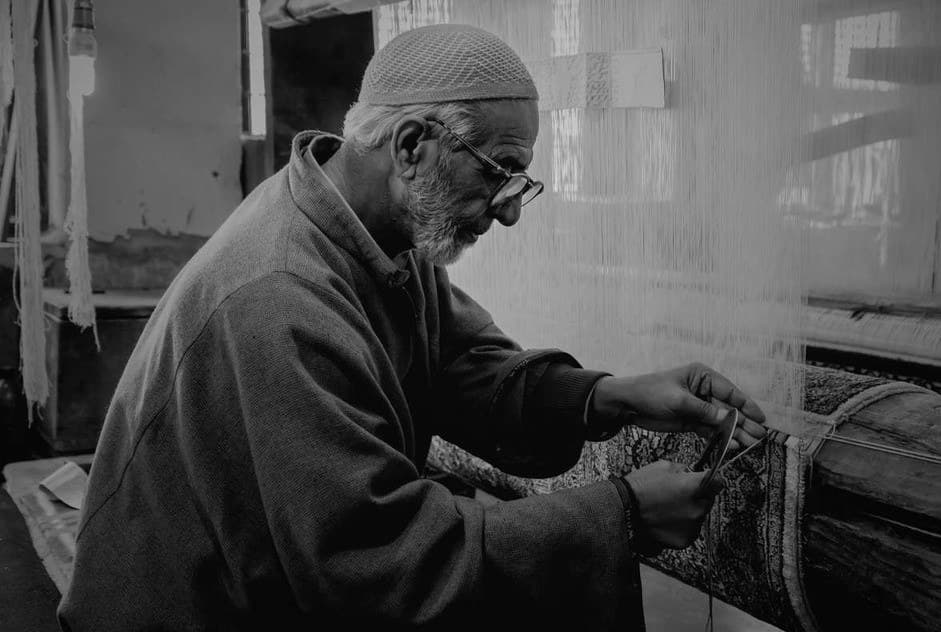
Now the months begin. Sitting at the loom, the weaver ties each knot around a pair of warps with the Persian (asymmetric) knot, cuts the thread, and moves to the next — following the chanted talim. After each row a weft thread is passed and beaten down with a comb, locking the row in place. A skilled weaver ties several thousand knots a day; a 6 × 9 ft carpet at 576 knots per square inch holds about 4.5 million.
Larger carpets are woven by two or three weavers side by side at the same loom, each responsible for a section of the width.
6. Clipping, washing and finishing
When the last row is tied, the carpet is cut from the loom and the pile is clipped to an even height with shears — a skill of its own, since an uneven clip destroys the design. The carpet is then washed to remove dressing and to bring up the lustre of the silk, dried flat, and the fringes and selvedges finished by hand.
7. Inspection
Finally the carpet is checked knot by knot against the naqsha — for straightness, symmetry, colour and finish — before it is photographed, certified and released. Only then does it leave the Valley.
Questions
What is a talim?
The talim is the coded written script used in Kashmir to record a carpet's design knot by knot. A reader chants it aloud at the loom and the weavers tie exactly what is called, allowing designs of millions of knots to be woven precisely.
How long does it take to weave a silk carpet?
It depends on size and knot density. A 2 × 3 ft silk-on-silk carpet takes about four months; a 6 × 9 ft carpet at 576 knots per square inch takes around ten months.
What knot is used in Kashmiri carpets?
The asymmetric Persian (Senneh) knot, introduced to Kashmir by Persian master weavers in the fifteenth century.
From the atelier
Explore our silk carpets
Every piece is made by hand in Kashmir, with its materials, dimensions and making time declared.